
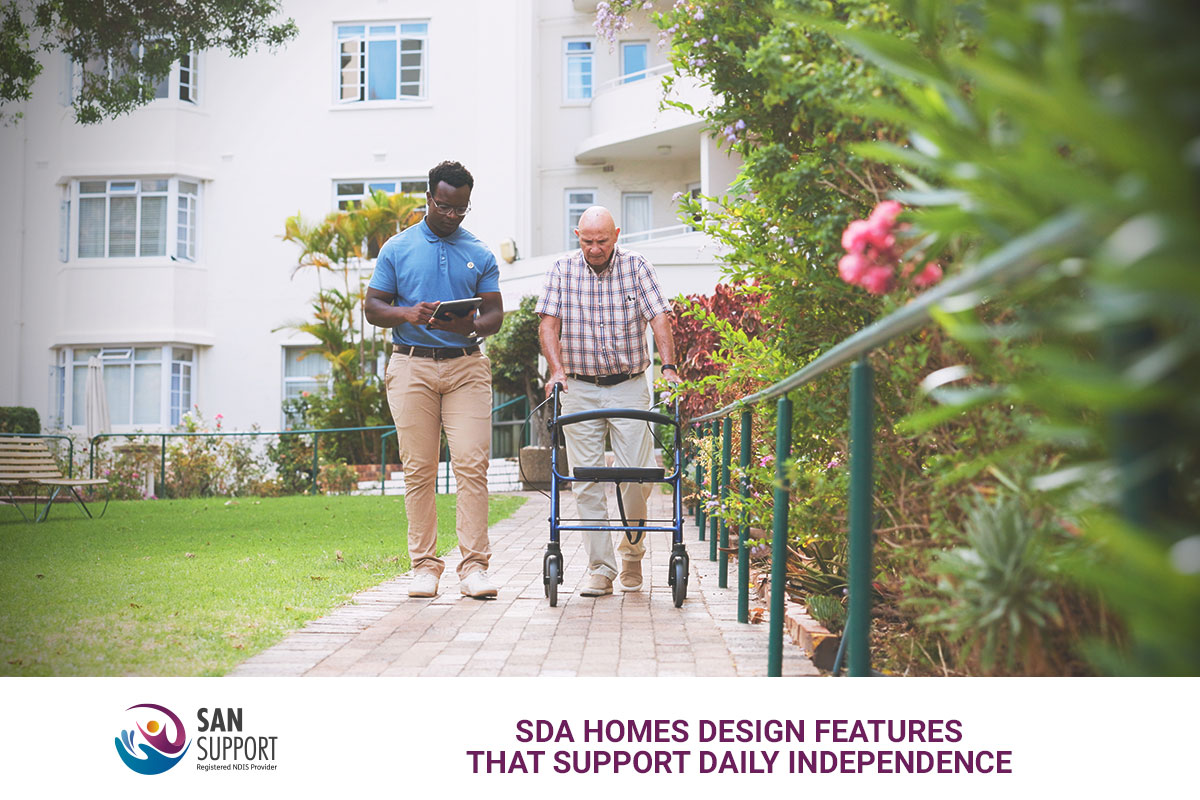
When people hear Specialist Disability Accommodation, they often think about the building first. They picture walls, bedrooms and a roof. Yet SDA is much more than that. The NDIS describes SDA as housing with features that meet disability support needs, such as wide doorways, wheelchair-accessible kitchen areas, ceiling hoists and button-operated doors. That means the design of the home can shape how a person moves, rests, cooks, bathes and feels each day.
Why design matters from the first hour of the day
Independence often starts with small moments. Can someone get out of bed safely? Can they reach the bathroom without help? Can they prepare breakfast with less strain? Good SDA design supports these moments. It reduces barriers before they become problems. A better layout can also lower fatigue, reduce risk and make support delivery safer. The NDIS notes that SDA helps people live more independently and allows other supports to be delivered better or more safely.
A well-designed home can protect both freedom and routine. Wider circulation spaces can make movement smoother. Accessible bathrooms can improve dignity and privacy. Adjustable kitchens can make simple tasks more realistic. Smart home features can also save time and effort. These details may look minor on a floor plan, but they can change how much choice a person has during the day. Over time, that can build confidence and skill.
The right features depend on the right design category
SDA design is not one-size-fits-all. The NDIS SDA Design Standard sets out four categories. These are Improved Liveability, Fully Accessible, Robust and High Physical Support. Each category responds to different needs. Improved Liveability supports people with sensory, intellectual or cognitive impairments. Fully Accessible homes suit people who need strong physical access features, including wheelchair users. Robust homes focus on strength, durability and safety. High Physical Support homes may include features such as ceiling hoists, backup power and home automation.
This is why design features matter so much in Brisbane housing searches. A home may look modern and comfortable, yet still fail to match daily needs. Good SDA is not about style alone. It is about fit. The best outcome happens when the design category, the layout and the support model all work together. Participants, families and coordinators should look beyond photos and ask how the home will support daily tasks, safety and long-term goals. The NDIS also advises people to check that a dwelling meets their needs before they commit to a service agreement.
A house can support choice, not just care
True independence does not always mean doing everything alone. It often means having more control over how life runs. A better home design can support that control. Someone may be able to choose when to shower, prepare meals with less assistance or move from one room to another without waiting for physical support. That shift matters. It can support privacy, reduce frustration and create a stronger sense of home rather than service-based living.
This distinction also matters in NDIS planning. SDA is the housing itself. It is not the same as personal care, SIL or assistive technology. Those supports may still be needed, but the right home can help them work better. In practice, strong housing design can make support more efficient and less intrusive. That can improve outcomes for participants and make daily life feel more predictable and calmer.
Why this matters for SDA homes in Brisbane
For Brisbane participants, location still matters, but design should come first. Access to appointments, transport, community life and support teams can all shape the right housing choice. SAN Support’s current SDA property listings in and around greater Brisbane show this mix of design and liveability in action, with properties across suburbs including Runcorn, Caboolture, Morayfield, Burpengary, Slacks Creek and Spring Mountain. Some listings highlight features such as onsite overnight assistance rooms, fully accessible bathrooms and custom kitchens built for easier daily use.
The bigger point is simple. A home can either add friction to daily life or remove it. The right SDA design helps reduce friction. It can make routines smoother, support safer care and create more room for independence. That is why SDA is never just a house. For many NDIS participants, it becomes the setting that makes everyday goals more possible.
Conclusion
If you are exploring SDA homes in Brisbane, SAN Support offers Specialist Disability Accommodation alongside Support Coordination, Supported Independent Living, Personal Care and In-Home Supports, Community and Civic Participation, Occupational Therapy, Speech Pathology and other allied health services. SAN Support is a Brisbane-based registered NDIS provider, and its website also features current SDA property listings and blog resources that can help participants and families compare housing and connected supports more clearly.
Explore SDA Properties: SIL / SDA Properties in Brisbane
Learn more about NDIS