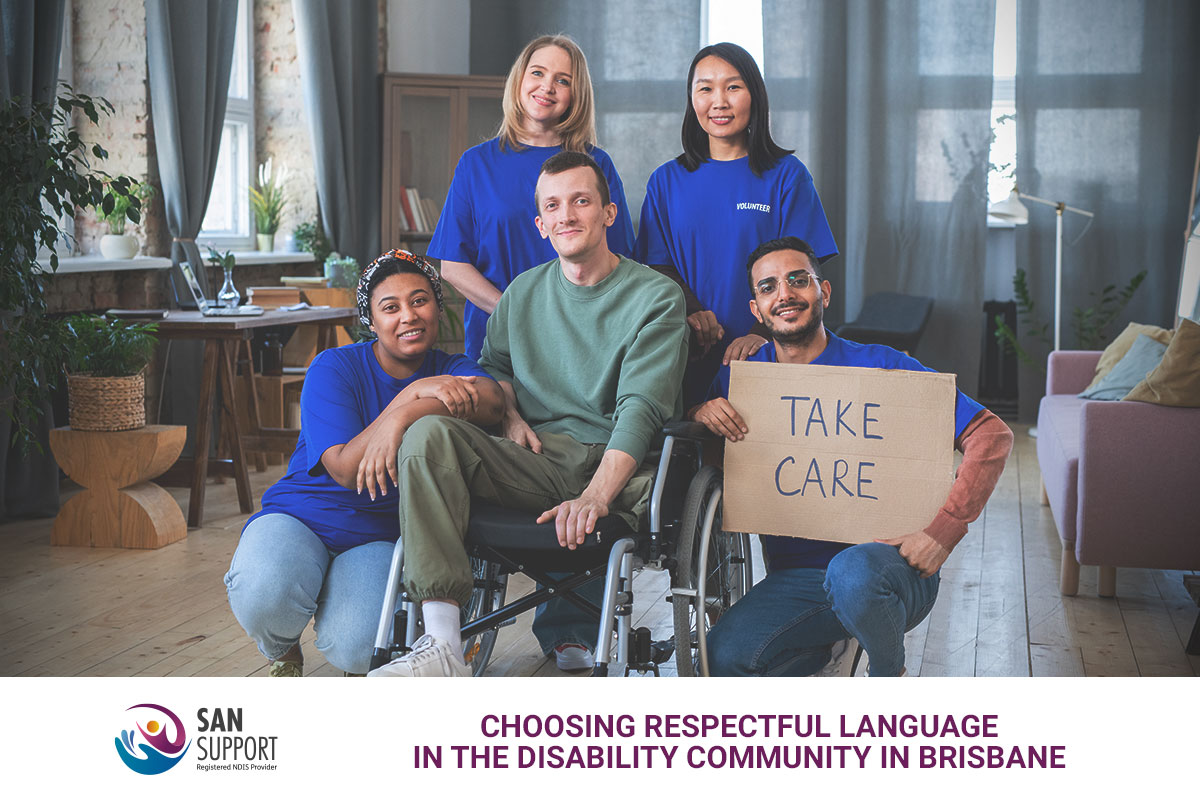
Choosing respectful language in the disability community is not about trying to sound perfect. It is about showing respect, listening carefully and recognising that every person has their own identity, preferences and communication style. In Brisbane, where disability support often involves families, support workers, therapists, coordinators and community organisations working together, the words we use can influence how safe, included and understood a person feels. Thoughtful language helps build trust. Poor language choices, even when unintended, can create distance or discomfort.
Why respectful language matters
Language shapes first impressions and ongoing relationships. In disability settings, it can either reinforce dignity or reduce someone to a diagnosis, label or assumption. Respectful communication reminds us that disability is only one part of a person’s life. It also supports better collaboration, because people are more likely to speak openly when they feel heard and valued.
This matters in everyday Brisbane settings such as NDIS meetings, support planning, community programs, housing discussions, allied health appointments and family conversations. A respectful approach is not only socially important. It is practical. Clear, thoughtful language makes conversations easier, reduces misunderstandings and helps people participate more confidently in decisions that affect their lives.
Start with the person, not the assumption
One of the most useful habits is to avoid assuming what language someone prefers. Some people are comfortable with person-first language, while others may prefer identity-first language. The most respectful approach is often the simplest one: ask, listen and follow the person’s lead.
For example, instead of deciding what sounds right on someone else’s behalf, you can ask, “How would you like me to refer to this?” That small step shows respect and avoids unnecessary awkwardness. It also keeps the focus on the individual rather than on what others think is best. A similar principle appears in SAN Support’s disability etiquette guidance, which encourages speaking directly to the person, avoiding assumptions and adapting communication to individual preferences.
Choose clear and neutral wording
Respectful language is usually clear, calm and neutral. In practice, that means avoiding terms that sound pitying, outdated, exaggerated or dismissive. Words that frame a person as helpless, inspirational simply for existing, or defined only by their impairment can feel demeaning, even when the speaker has good intentions.
A better approach is to describe support needs factually and without drama. For example, it is often more respectful to talk about access needs, communication preferences, support requirements or living arrangements than to rely on loaded or vague phrases. Neutral wording helps conversations stay practical and person-centred, especially when discussing services, goals or daily routines.
Let everyday communication reflect dignity
Respectful language is not only about formal terms. It also includes tone, body language and who gets addressed in a conversation. A common mistake in disability settings is speaking to a family member, support worker or companion instead of speaking directly to the person. Even subtle habits like this can reduce a person’s sense of autonomy.
A better standard is to speak to the person first, ask before offering help and avoid treating mobility aids or communication supports casually. SAN Support’s published guidance on interacting with people with disabilities highlights these same principles, including speaking directly to the person, asking before helping, respecting personal space and allowing time for communication.
Be careful with group language
Another practical tip is to think carefully about collective terms. Phrases like “the disabled” or broad stereotypes about what people with disability can or cannot do can flatten very different experiences into one category. Respectful communication recognises diversity within the disability community. Not all support needs are visible, not all people want the same type of assistance, and not all people identify with the same language.
This is especially important in workplaces, schools, housing settings and public communication across Brisbane, where one message may be seen by participants, carers, providers and community members all at once. Inclusive wording should leave room for difference rather than assuming one size fits all.
Keep learning and updating your language
Language changes over time, and that is normal. Terms that were once common may no longer feel respectful. Newer language may better reflect how people want to be recognised today. The goal is not to be afraid of making mistakes. The goal is to stay open, learn when corrected and keep improving.
A practical way to do this is to review templates, service information, staff communication, intake forms and website content regularly. If a word or phrase feels clinical, outdated or overly negative, revise it. If a participant or family member shares a preference, make a note of it and use it consistently. Respect grows when people can see that feedback leads to change.
Respectful language supports better inclusion
When respectful language becomes part of everyday practice, it improves more than communication. It supports inclusion, confidence and stronger relationships. People are more likely to engage, ask questions and express their goals when they feel their identity is being handled with care.
In Brisbane disability support settings, respectful language should be viewed as part of good service, not an extra. It belongs in intake conversations, support planning, therapy sessions, housing discussions, staff training and community participation. Choosing better language does not have to be complicated. It starts with listening, asking, staying open and treating every person as the expert in their own life.
Thoughts
For Brisbane participants, families and carers looking for disability support that values respectful, person-centred communication, SAN Support presents itself as a Brisbane-based provider offering Support Coordination, Allied Health Services, Occupational Therapy, Speech Pathology, NDIS Plan Management, Personal Care and In Home Supports, Community and Civic Participation, Supported Independent Living, Short Term and Medium Term Accommodation, and Specialist Disability Accommodation.
SAN Support also maintains an active blog and a current SDA properties page covering Brisbane-area locations such as Runcorn, Caboolture, Morayfield, Burpengary East, Slacks Creek and Spring Mountain. Explore the SAN Support website, services page, blog and SDA listings to learn more!upport services page, SDA page and blog to compare options and make more confident support decisions.