
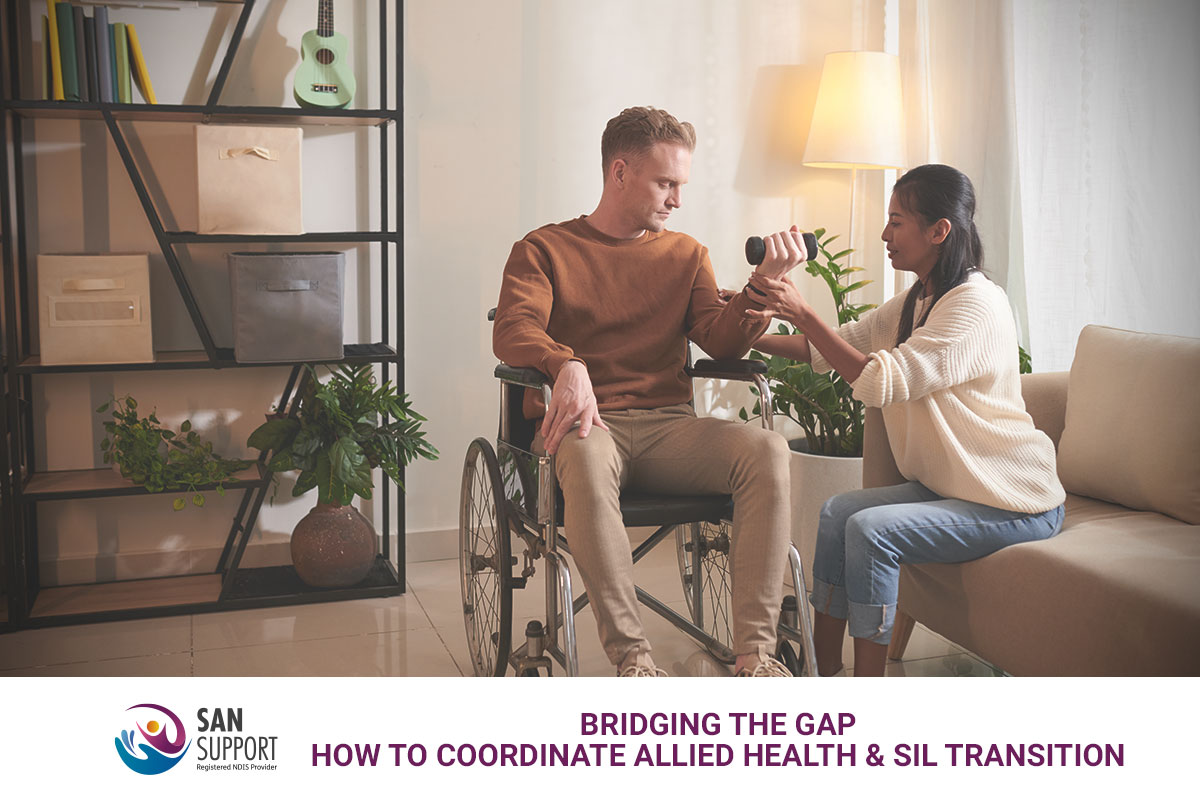
A successful move into Supported Independent Living rarely depends on one report. It depends on linked tasks finishing in the right order. SIL transition planning in Brisbane should connect allied health evidence, housing readiness, participant choice and workforce preparation. Support Coordinators often hold these moving parts together.
Why SIL Timelines Become Disconnected?
SIL funds ongoing support with daily tasks inside a participant’s home. It is separate from the building itself, including Specialist Disability Accommodation. Some participants may receive both supports.
Problems arise when teams treat reports as paperwork. An OT may recommend equipment after the lease date becomes fixed. A speech pathologist may identify communication supports after worker training finishes. A physiotherapist may prescribe transfers without seeing the bedroom layout.
The result can be an unsafe first night, delayed equipment or temporary workarounds.
Set One Shared Moving Date
Start with a proposed move date and work backwards. Treat it as a planning anchor, not an unchangeable promise.
Create one transition schedule for the participant, decision-makers, SIL provider, therapists, suppliers and property contact. Give every task an owner, due date, dependency and completion record.
“OT report underway” gives little control. “Final OT recommendations due before roster sign-off” creates a useful dependency.
Confirm What Evidence Must Be Current
The NDIS may consider allied health reports when reviewing SIL needs. Relevant information includes functional capacity, daily support needs, current circumstances and future living goals.
Ask each practitioner whether existing evidence reflects the participant’s abilities, risks and intended home. Do not request a full reassessment automatically. First identify the decision that the report must support.
The OT may confirm transfers, personal care space, assistive technology or home setup. A physiotherapist may document mobility and safe handling. A speech pathologist may specify communication systems and worker strategies.
Reports should explain what workers must do, when they must do it and what equipment they need.
Map the Transition Backwards
- Eight to twelve weeks before moving, confirm consent, information-sharing and the proposed support model. Collect current plans, assessments, risk documents and property information.
- Six to eight weeks before moving, schedule necessary home visits. Give practitioners floor plans, measurements, bathroom details and proposed equipment locations.
- Four to six weeks before moving, finalise recommendations affecting purchases, rosters or worker competencies. Confirm delivery, installation and trial dates for equipment.
- Two to four weeks before moving, translate clinical advice into daily routines. Finalise mealtime plans, communication profiles, medication processes and emergency responses.
- During the final week, complete a property walkthrough and test essential equipment. Confirm utilities, transport, worker access, belongings and first-day responsibilities.
These periods offer a planning framework, not an NDIS rule. Complex equipment, modifications or funding decisions may need longer.
Turn Reports Into Worker-Ready Instructions
A clinical report does not replace an implementation plan. Support Coordinators should confirm who will convert each recommendation into practice.
An OT may specify a transfer method. The SIL provider then needs trained workers, suitable equipment and enough rostered time. A speech pathologist may recommend AAC access. The home needs charging points, backups and workers who understand the system.
Use a transition meeting to test every recommendation against the roster and home. Record gaps, actions and escalation points.
Protect Participant Choice
Efficiency should not push the participant out of decisions. Confirm how they want information presented and who they want involved.
Discuss housemates, routines, privacy, cultural needs, visitors and community access. Build familiar activities into the first weeks. A technically complete move can still fail when the routine feels imposed.
Plan the First Six Weeks
The moving date starts implementation. It should not close the transition project.
Schedule reviews after the first few days, two weeks and six weeks. Track incidents, fatigue, missed routines, equipment issues and changes in support time.
Ask practitioners to review recommendations inside the new home when needed. Update worker instructions after trials. Escalate funding or safety gaps before temporary practices become permanent.
How SAN Support Can Help?
SAN Support can help Brisbane Support Coordinators connect allied health planning with SIL implementation. Our Occupational Therapy, Speech Pathology and Allied Health services can assess routines and practical support needs.
Our Support Coordination team can organise providers, reports, quotes and service timing. SAN Support also offers Supported Independent Living and lists SDA properties across Brisbane and South East Queensland.
This connected approach can reduce gaps between clinical recommendations, housing decisions and daily support delivery. Each participant still needs an individual plan, clear responsibilities and realistic timeframes.
A coordinated SIL move does not succeed because every task finishes quickly. It succeeds because each task finishes before the next one depends on it.
Explore SDA Properties: SIL / SDA Properties in Brisbane
Learn more about NDIS