
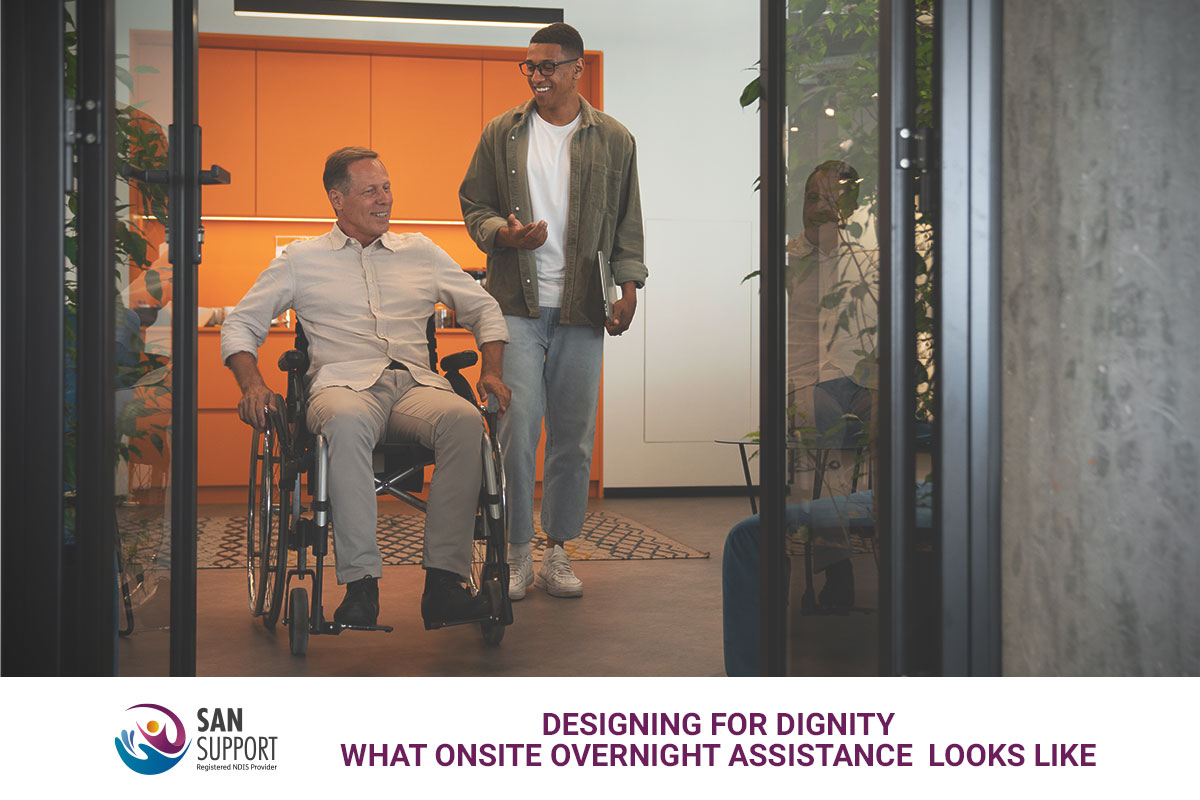
A home should feel like your own space, even when overnight help must remain close. Well-designed Onsite Overnight Assistance in Brisbane can make this possible. It places a support worker nearby without turning private living areas into a workplace. The result can be greater physical autonomy, stronger privacy and faster access to assistance.
What Is Onsite Overnight Assistance?
Onsite Overnight Assistance, often called OOA, is a separate room or apartment used by workers providing overnight support. In an apartment complex, it may be a separate apartment within the same complex. In other SDA building types, it may sit inside or beside the dwelling. The space keeps support workers close to participants who may need help overnight.
An OOA space forms part of the housing design. It is not the same as a participant’s funded care roster. Staffing depends on the person’s assessed needs, NDIS plan and agreed support model.
Some participants need sleepover support with occasional assistance. Others need active overnight support, where a worker remains awake. The right arrangement should reflect how much assistance the participant needs during normal sleeping hours.
How Does an OOA Space Protect Privacy?
Privacy starts with clear physical separation. The worker uses a dedicated area instead of a participant’s bedroom, lounge or personal retreat. This helps the home remain a home.
A thoughtful layout also limits unnecessary movement through private areas. The OOA room should let workers prepare, rest and respond without dominating shared spaces. Doors, pathways and room placement should support discretion.
A suitable communication or call system can help participants request assistance without constant checking. It should remain easy to reach from the bed and other important areas.
This approach respects bodily autonomy. Where appropriate, participants can choose when to request help. Support remains available, but it does not need to feel intrusive.
What Does Overnight Assistance Look Like?
Immediate proximity means a worker can respond promptly when disability-related assistance becomes necessary. The exact process should reflect the participant’s support plan, preferences and individual risks.
A participant may need help with repositioning, transfers, toileting, continence care or another personal care task. Another person may need assistance related to seizures, respiratory needs or unexpected distress.
High-intensity personal activities require workers with suitable skills and experience. Their training should relate directly to the participant’s complex disability support needs.
Good overnight support also depends on preparation. Workers need clear handovers, accessible equipment and agreed emergency procedures. Call systems should be tested regularly. The path between the OOA room and participant areas should also remain accessible and uncluttered.
OOA Does Not Mean Constant Surveillance
The phrase “24/7 care” can create the wrong picture. It may suggest that someone always watches the participant or remains in the same room.
In practice, respectful disability support balances availability with personal control. A worker can remain close without constantly entering the participant’s private areas.
Participants should know who is onsite, when shifts change and how to request help. They should also understand what happens during an emergency. Clear arrangements reduce uncertainty for participants, families and support workers.
Daily routines should remain participant-led. This includes choices about bedtime, visitors, quiet time, personal care and morning routines.
Where risks allow, workers should wait for a request before entering private areas. They should also knock, explain what they are doing and respect personal preferences. Dignity grows through these ordinary choices.
Questions to Ask About an OOA Home
When considering Specialist Disability Accommodation with OOA, look at the space and support model together. Ask where the OOA room sits and how workers reach participant areas.
Consider noise, lighting and whether movement at night could disturb residents. Check how the call system works during power, internet or equipment disruptions.
Ask who provides the overnight assistance and whether participants can contribute to provider selection. Confirm whether the arrangement involves sleepover support, active overnight assistance or shared onsite support.
The answer should reflect the participant’s needs. It should not rely on a standard roster that offers little flexibility.
Participants and families should also discuss emergency procedures, worker training and privacy expectations. These conversations help everyone understand what respectful overnight assistance should look like.
How SAN Support Can Help?
SAN Support offers Specialist Disability Accommodation options across Brisbane and South East Queensland. Our available properties focus on accessibility, comfort and greater independence.
Our Caboolture SDA property, for example, includes a dedicated Onsite Overnight Assistance room. Tenants can also have a say in selecting the provider responsible for onsite overnight assistance. This supports greater choice and control within the home.
We can help participants consider how housing connects with their wider disability supports. SAN Support provides Support Coordination, Supported Independent Living, Personal Care and In-Home Supports, alongside allied health services.
This connected approach can help participants explore suitable housing, clarify their support needs and develop routines that protect dignity overnight.
Designing Overnight Support Around the Person
Onsite Overnight Assistance works best when housing design and support planning share one goal: keeping help close without sacrificing privacy.
A dedicated OOA space gives workers a suitable base. At the same time, participants retain greater control over their home, routines and personal boundaries.
For people exploring SDA in Brisbane, the key question is not simply whether an OOA room exists. The better question is how the space, staffing model and daily practices support safety, choice and an ordinary home life.
Explore SDA Properties: SIL / SDA Properties in Brisbane
Learn more about NDIS