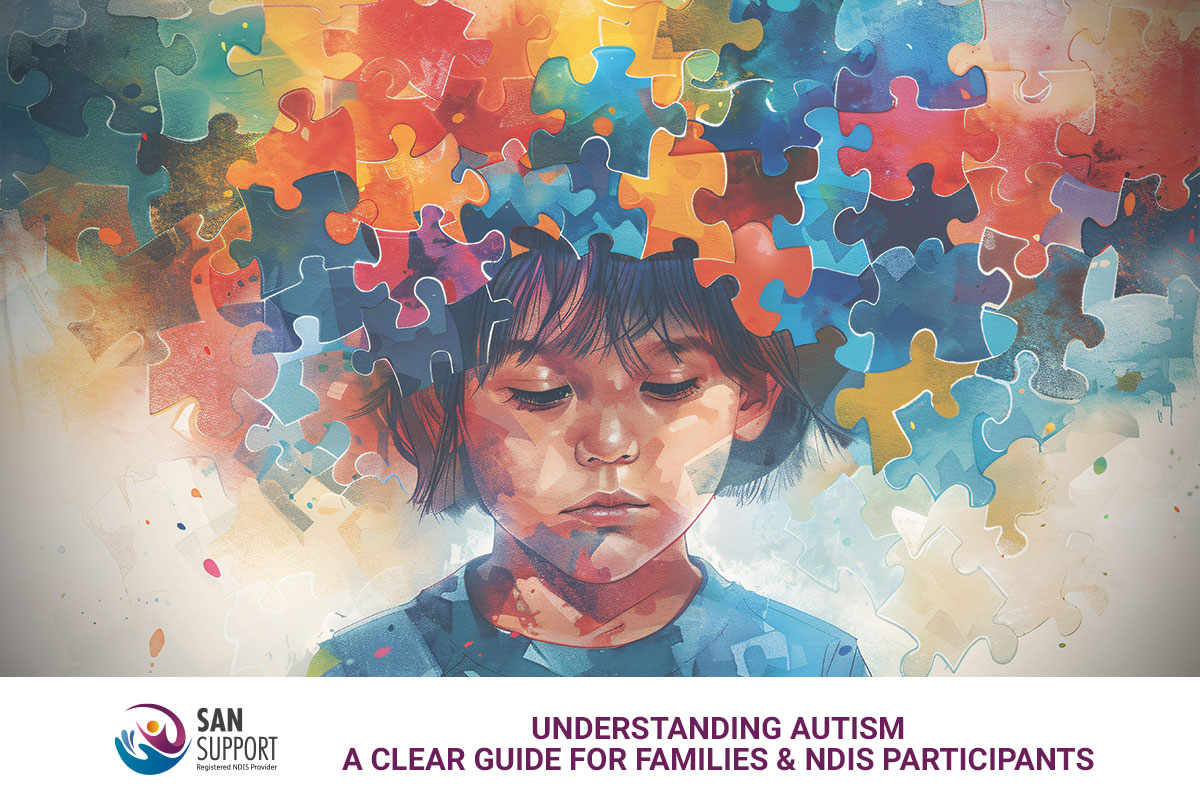
Understanding autism can help families, carers, educators, and support workers respond with more confidence. Autism, or Autism Spectrum Disorder, is a neurological and developmental condition. It affects how a person communicates, interacts, behaves, and processes sensory input. The word “spectrum” matters because autism presents differently in each person. Some people need high support in daily life. Others live quite independently and need support only in specific settings.
What is Autism?
Autism is not an illness that needs a cure. It is a different way of experiencing the world. That view helps shift the conversation from “fixing” a person to understanding their needs, strengths, and preferences. For Brisbane families, this approach often leads to better daily routines, better communication, and more respectful support. It also helps when planning school, community, or NDIS supports.
Many autistic people share some common traits, but no two profiles look the same. A person may find social cues hard to read. They may prefer direct language. They may speak very little, use alternative communication, or communicate fluently but still feel overwhelmed in social settings. Repetitive movements, strong interests, and a preference for routine also appear often. Sensory differences are common too. Sounds, lights, textures, smells, or crowded places may feel intense, distracting, or even painful.
Diagnosis can happen in early childhood, though many people receive a diagnosis later. The reference article notes that specialists such as psychologists, paediatricians, and speech therapists often contribute to assessment. Diagnosis usually looks at behaviour, development, communication, and sensory patterns over time. A late diagnosis can still be valuable. It may explain long-standing challenges and help a person access support that fits better.
Understanding Autism
One of the most useful parts of understanding autism is learning to focus on function, not labels alone. Ask practical questions. What helps the person feel calm? What makes communication easier? Which environments support concentration? What changes trigger stress? Small adjustments can make a big difference. Clear routines, visual supports, quiet spaces, extra processing time, and predictable transitions often reduce pressure and improve participation.
Autism also comes with strengths. Many autistic people show strong attention to detail, deep knowledge in areas of interest, honesty, consistency, creativity, or a strong sense of fairness. These strengths can support learning, work, and relationships when the environment fits the person well. Families and services often get better outcomes when they notice both support needs and personal strengths. That creates a more balanced and respectful view of autism.
Support can help autistic people build skills, reduce daily barriers, and increase independence. The reference article highlights speech therapy, occupational therapy, behavioural support, and educational support as common options. These supports work best when they align with the person’s goals and comfort. Therapy should not push people to hide who they are. It should improve communication, sensory regulation, daily living skills, participation, and confidence.
Where NDIs comes in?
For NDIS participants in Brisbane, support planning often starts with daily life. A child may need help with communication or school transitions. A teenager may need support to join community activities. An adult may need help with routines at home, travel training, personal care, or building independent living skills. The right mix of support depends on age, goals, environment, and functional needs. That is why person-centred planning matters.
Families also benefit from understanding a few common myths. Autism does not always involve intellectual disability. Autistic people do feel emotion, though they may show it differently. Vaccines do not cause autism. These misconceptions can delay support and create stigma. Better information leads to better decisions at home, in classrooms, and across the community.
A supportive environment often matters as much as formal therapy. Patience helps. So does plain language. Many autistic people benefit when others avoid rushing conversations, reduce sensory overload, and ask what support works best. Respect for preferences matters too. Some people prefer written instructions. Others need downtime after social activity. When people feel understood, participation becomes easier and more meaningful.
Brisbane’s PoV
In Brisbane, autism support often connects across home, school, therapy, and community settings. That is why good coordination matters. The SAN Support blog already covers practical NDIS topics for Brisbane participants, including how supports can stop matching daily life when needs change. That local focus matters because support works best when it reflects real routines, real goals, and local service access.
Understanding autism is not about memorising a checklist. It is about seeing the person clearly. Listen to what they enjoy, what stresses them, and what helps them succeed. Build supports around that information. When families and providers take that approach, autistic children and adults have a better chance to feel safe, included, and confident in everyday life.
Conclusion
For Brisbane participants who need practical disability support after diagnosis or during plan changes, SAN Support provides Support Coordination, Personal Care and In Home Supports, Community and Civic Participation, Supported Independent Living, Occupational Therapy, Speech Pathology, Allied Health services, and SDA options in Brisbane. SAN Support is based in Greenslopes and supports participants across Brisbane and south east Queensland, with SDA properties listed in areas such as Runcorn and other Brisbane locations
Explore SDA Properties: SIL / SDA Properties in Brisbane
Learn more about NDIS