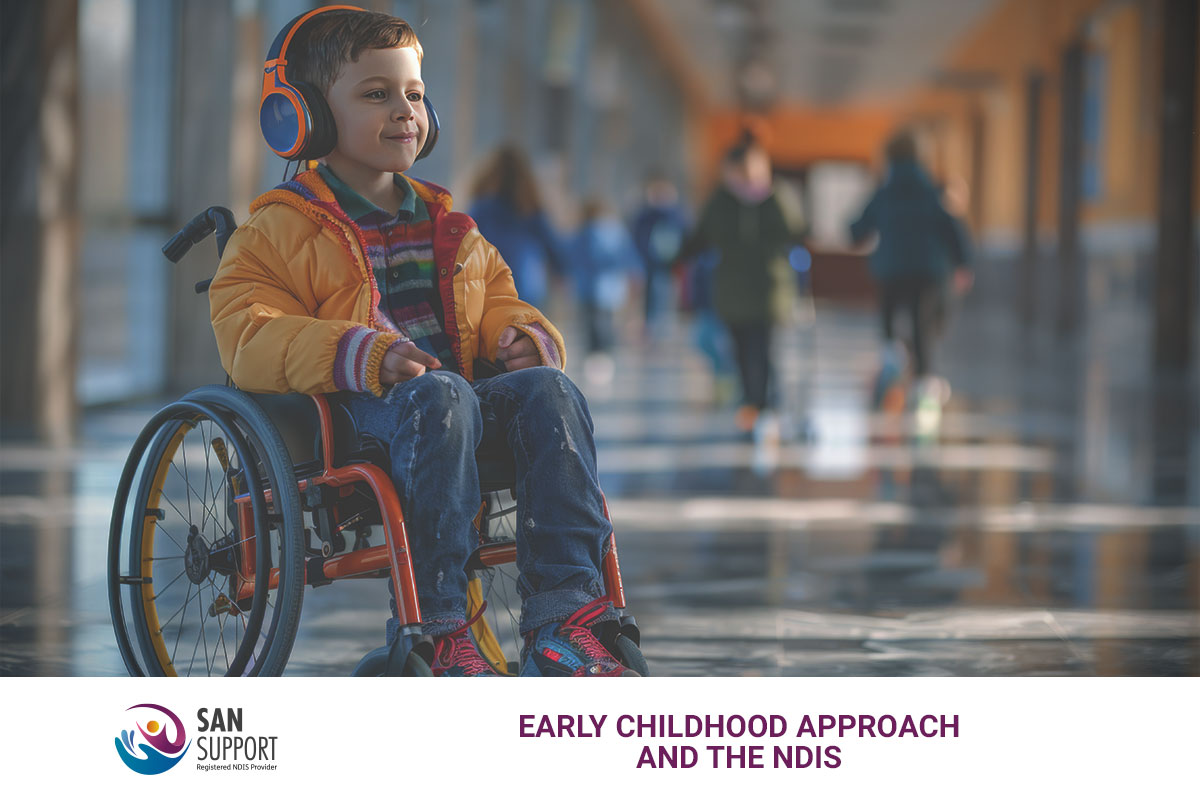
If you are a parent or carer of a young child with developmental delay or disability, navigating support systems can be overwhelming. Fortunately, the NDIS Early Childhood Approach (ECA) provides early, individualised support for children under nine, helping them thrive during the most critical years of development.
While the National Disability Insurance Scheme (NDIS) is designed for Australians aged 9 to 65, the ECA ensures that younger children still receive the support they need to build essential life skills, improve their independence and reduce the need for future interventions.
This guide will walk you through how the ECA works, who it supports, what services are available and how to take the first steps.
What Is the Early Childhood Approach?
The Early Childhood Approach, formerly known as ECEI (Early Childhood Early Intervention), provides support for:
- Children under six with developmental delay (without requiring a formal diagnosis)
- Children under nine with a diagnosed disability
The approach is built on evidence-based practices and expert input from the early childhood sector. Its goal is to deliver support early, when it can have the greatest impact.
By offering therapy and intervention services as early as possible, the ECA helps children develop crucial skills in natural environments such as home, childcare or community settings.
Why Early Intervention Matters
Children develop at different rates. Sometimes, a child may need a little extra support to reach their developmental milestones. Early childhood intervention addresses concerns across areas such as:
- Movement and physical coordination (gross and fine motor skills)
- Communication and speech development
- Social and emotional skills
- Daily living and self-care abilities
Early intervention services give children the tools they need to participate more fully in everyday life, both now and in the future. Research shows that the earlier the support begins, the more significant the outcomes.
What Supports Are Available Under the ECA?
Families can access a wide range of therapeutic and developmental supports tailored to their child’s needs through the Early Childhood Approach.
These may include:
- Speech Pathology – to support language, speech and communication
- Occupational Therapy – to develop fine motor skills, routines and sensory regulation
- Positive Behaviour Support – to understand and manage challenging behaviours
- Psychology – to build emotional and social skills
- Exercise Physiology – to improve strength, balance and movement
- Therapy Assistants – to reinforce therapeutic strategies between formal sessions
These supports can be delivered in flexible settings such as home, community centres or early learning environments, making them more effective and accessible.
Who Are Early Childhood Partners?
Early Childhood Partners are professionals and organisations funded by the NDIS to deliver the Early Childhood Approach. They provide:
- Initial assessments and developmental screening
- Recommendations for early supports
- Links to local services like playgroups and family support programs
- Referrals to allied health professionals if needed
- Assistance in applying for an NDIS plan if long-term support is required
Early Childhood Partners also focus on family-centred, play-based strategies, helping parents and carers to feel empowered and confident in supporting their child’s growth.
If you live in a rural or remote area, access may differ slightly, but help is still available through your local NDIS contacts.
Starting Early, Without a Diagnosis
One of the most inclusive features of the ECA is that children under six do not need a formal diagnosis to start receiving support. This removes the stress of waiting for medical assessments and allows families to access early assistance based on observed needs.
This early access model called early connections includes:
- Support to build your child’s skills in real-world settings
- Guidance for parents to support development at home
- Referrals to community-based programs
- Opportunities to meet other families in similar situations
If your child’s support needs are ongoing and more complex, your Early Childhood Partner may help transition them into a full NDIS plan.
What Happens When My Child Turns Nine?
When your child turns nine, support under the Early Childhood Approach will end. However, they can continue to receive appropriate services through the NDIS with the help of Local Area Coordinators (LACs).
During this transition, the Early Childhood Partner and LAC will:
- Reassess your child’s current support needs
- Help you prepare for the next NDIS planning meeting
- Develop a new plan with goals suited to your child’s age and future development
- Connect you with new or ongoing local supports
The transition is designed to be seamless, so your child does not miss out on vital support as they grow.
Managing NDIS Funds for Your Child
Once your child is approved for an NDIS plan, you will need to decide how to manage the funding. You have three options:
Self-Management: You handle everything from bookings to payments and record-keeping. It offers full control but requires time and confidence with NDIS processes.
Plan Management: A registered Plan Manager manages invoices and budgets on your behalf. You still choose your providers, even if they are not NDIS-registered. This option is fully funded by the NDIS.
NDIA (Agency) Management: The NDIA pays providers directly but limits you to NDIS-registered services.
Most families choose Plan Managementfor its balance of flexibility and expert support.
Final Thoughts
The NDIS Early Childhood Approach gives children under nine a valuable opportunity to access developmental supports during their most formative years. By identifying needs early and connecting families with the right services, the ECA helps children grow in confidence and independence at home, in school and in the community.
If you are unsure about where to start, begin by speaking with your child’s GP, educator or local NDIS partner. Acting early can make a significant difference.
About SAN Support
SAN Support is a registered NDIS provider dedicated to empowering families across Australia. Our team works alongside parents, carers and professionals to simplify the NDIS journey from early intervention to ongoing plan management.
We connect families to trusted allied health services, support coordination and community programs that suit each child’s unique needs. Whether you are navigating the Early Childhood Approach or managing an NDIS plan, our experienced staff is here to provide clarity, compassion and professional care every step of the way. Let us help your child access the supports they need to thrive.