
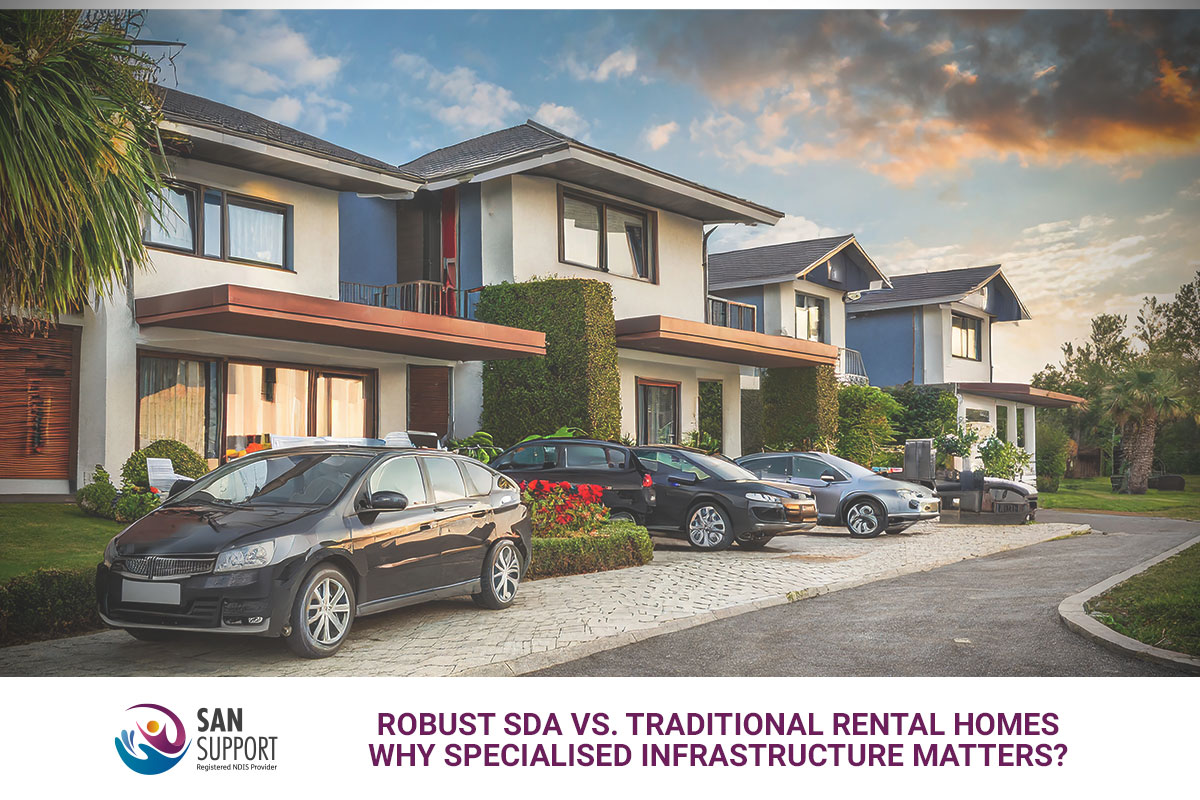
For some NDIS participants, a standard rental may look suitable at first glance. It may have enough bedrooms, a convenient location and familiar household features.
However, ordinary rentals are generally designed for typical residential use. They do not need to meet Robust Specialist Disability Accommodation design requirements.
That difference matters when a participant needs housing that can better manage heavy use, property damage risks or complex behaviours. Purpose-built Robust SDA combines durability, safety and privacy within a home-like environment.
Why Standard Rentals Can Struggle with Complex Support Needs?
Traditional rental homes serve the broader housing market. Their walls, doors, lighting and fittings usually suit everyday household use.
For many people, that works well. However, standard construction may create practical problems for participants with specialised housing needs.
Repeated impacts can damage lightweight wall linings. Standard handles or fixtures may fail under unusually heavy use. Exposed light fittings can create another point of damage.
Poor acoustic separation may also affect privacy and household comfort.
When these problems repeat, maintenance can become disruptive and costly. Repairs may involve tradespeople, noise, restricted spaces and changes to daily routines.
More importantly, damaged fittings or surfaces may create additional safety risks for residents and support workers.
Robust SDA Starts with a Different Design Brief
Robust SDA is not simply a traditional rental with stronger furniture.
The NDIS SDA Design Standard sets specific requirements for Robust housing. These requirements focus on durability, safety and serviceability.
Robust dwellings use resilient but unobtrusive materials that can withstand heavy use. High-impact fittings and fixtures also form part of the design approach.
Participant bedrooms require sound insulation. Recessed lighting helps reduce damage risks.
Design documentation must also identify retreat and egress areas for staff and other residents.
These features help the home respond to foreseeable pressures before repeated damage occurs.
Purpose-Built Durability Can Reduce Repeated Maintenance
Maintenance affects more than the property itself. It can interrupt routines and change how residents use their home.
Consider a standard wall that needs repeated repairs after impact. Each repair can involve noise, unfamiliar workers and temporary loss of space.
Robust SDA can use higher-impact wall linings and resilient fixtures from the beginning.
That does not make a home indestructible. However, specialised infrastructure can reduce repeated repair cycles where those risks are foreseeable.
The NDIS describes Robust housing as strong and durable, with design that reduces the need for repairs and maintenance.
For participants who value predictable environments, fewer avoidable disruptions can make everyday living easier.
Safety Is Built into the Infrastructure
A specialised home should still feel like a home.
This principle appears within Robust SDA requirements. Resilient features should remain as inconspicuous as practical while supporting safety and durability.
Safety also involves movement through the property.
Robust design considers retreat and egress areas for situations where residents or staff may need additional space.
Sound-insulated bedrooms can improve privacy. Recessed lighting removes vulnerable exposed fittings. Durable handles and fixtures can better tolerate demanding use.
Together, these features create infrastructure designed around anticipated needs rather than repeated reactive repairs.
Robust SDA and Traditional Rentals Are Not Interchangeable
Traditional rental housing can suit many people with disability. Robust SDA serves eligible participants whose disability-related needs require specialised housing features.
The key issue is functional fit.
A modern rental may look spacious and comfortable. Yet it may still lack impact-resistant materials, acoustic treatment or purpose-designed safety features.
Cosmetic renovations also do not automatically make an ordinary property Robust SDA.
Likewise, participants should not choose a home only because it carries a Robust classification.
Location, layout, privacy, household compatibility and support arrangements still matter. The property should also align with the participant’s goals and daily routines.
Specialised infrastructure works best as part of a broader person-centred housing approach.
Explore Robust SDA in Brisbane with SAN Support
SAN Support helps participants and families explore Specialist Disability Accommodation across Brisbane and South East Queensland.
We can discuss housing preferences, daily routines and property features while participants consider suitable home and living options. Where appropriate, SAN Support can also assist through Supported Independent Living, Support Coordination and allied health services.
SAN Support’s Caboolture SDA provides a practical example of specialised housing. The property is built to the Robust design category and includes three bedrooms, two living areas and dedicated Onsite Overnight Assistance space.
Choosing between a traditional rental and Robust SDA should go beyond appearance or postcode.
The right home should support safety, stability and everyday comfort while giving participants space to pursue greater independence.
*This article provides general NDIS information and does not replace individual legal or tenancy advice.
Explore SDA Properties: SIL / SDA Properties in Brisbane
Learn more about NDIS