
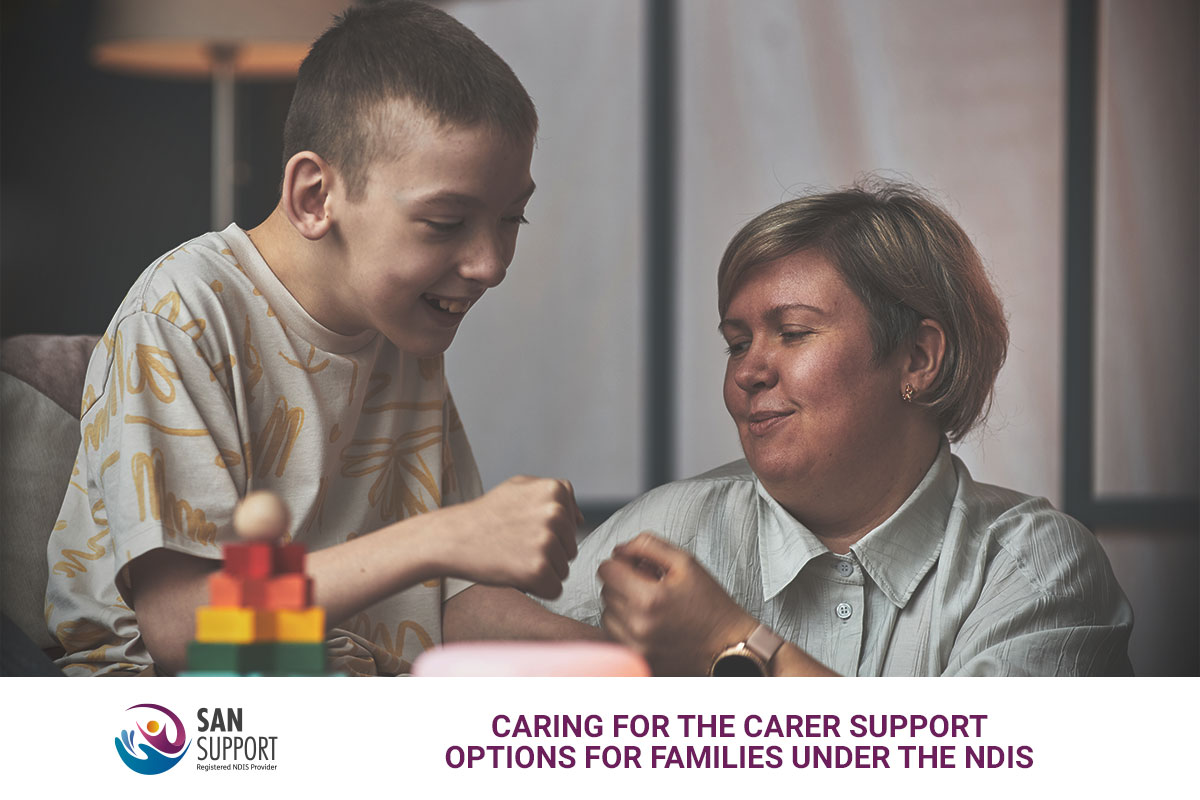
Caring for a loved one with a disability is deeply meaningful but can also be physically and emotionally demanding. Carers provide essential support that enables people with disabilities to live independent, fulfilling lives. However, carers also need support to maintain their own wellbeing, and this is where NDIS support for carers plays an important role.
At SAN Support, we believe carers are the heart of the disability community and caring for them is just as important as caring for participants. The National Disability Insurance Scheme (NDIS) recognises this too, offering several supports and pathways designed to help carers sustain their health, balance and quality of life.
This guide explores key NDIS support options for carers and families, practical tips to access them and ways to build sustainable care routines.
Why Carers Matter
Carers whether they are parents, partners or friends are often the backbone of support for NDIS participants. They provide daily assistance, advocacy and emotional care that formal services alone cannot replace.
When carers are supported, everyone benefits. The NDIS acknowledges this by including strategies and resources that strengthen carers wellbeing and capacity. Supported carers are better able to sustain their role, maintain their health and help participants reach their goals.
Simply put: when carers thrive, participants thrive.
NDIS Support Options for Families and Carers
The NDIS provides several direct and indirect supports that ease the caring load, encourage balance and promote wellbeing.
Short-Term Respite (Short-Term Accommodation)
Short-Term Accommodation (STA), often called respite, allows both the participant and their carer to take a break from their regular routine.
How it works:
- The participant can stay in a supported accommodation setting or attend a program while the carer takes time off.
- Respite may also be provided in-home by a qualified support worker.
- It complements, rather than replaces, regular care arrangements.
- STA is funded through the participant’s Core Supports budget.
Why it matters:
Regular breaks allow carers to rest, recharge and prevent burnout supporting sustainable care for the long term.
Supports That Indirectly Benefit Carers
Many NDIS-funded supports for participants also ease the pressure on carers.
Examples include:
- Personal care and household assistance that reduce daily responsibilities.
- Community participation activities that give carers a break during the day.
- Therapies and skill-building supports that increase the participant’s independence.
Tip: When preparing for NDIS planning meetings, explain how specific supports also benefit you as the carer. This helps demonstrate why they are “reasonable and necessary” under NDIS guidelines.
External Carer Supports Beyond the NDIS
In addition to NDIS-funded services, carers can access national and community programs for added support.
Key resources include:
- Carer Gateway – Free counselling, coaching, respite planning and peer support.
- Carers Australia – Advocacy, education and wellbeing resources.
- Services Australia – Carer Allowance and Carer Payment for eligible carers providing daily care.
These services complement NDIS supports and focus on carer health, resilience and connection.
Key NDIS Principles for Carers
To navigate the NDIS effectively, carers should understand a few guiding principles:
- Reasonable and Necessary Supports:
The NDIS funds supports directly related to the participant’s disability that represent good value and improve long-term outcomes. - Recognition of Informal Supports:
Carers and family members are part of the participant’s informal support network and are considered during planning and reviews. - Documenting the Caring Role:
Keep records of your responsibilities the hours you provide support, the types of tasks and how they affect your wellbeing. This information helps planners assess the level of support needed for sustainability.
Practical Tips for Carers Navigating the NDIS
Caring can be demanding, but the right approach makes it more sustainable. Here are some practical steps to help you make the most of available supports:
- Be part of NDIS planning: Attend all meetings and voice your needs.
- Schedule respite early: Do not wait until you are exhausted plan regular breaks.
- Use external services: Access Carer Gateway and Carers Australia for coaching, counselling and crisis respite.
- Focus on independence-building supports: Choose NDIS-funded services that help the participant become more self-sufficient.
- Prioritise your wellbeing: Make time for rest, exercise and social connections.
- Review plans regularly: If your caring role changes, request an NDIS plan review.
Remember, caring for yourself is not selfish, it is essential for the sustainability of your caring role.
How SAN Support Helps Carers and Families
At SAN Support, we partner with families and carers to make navigating the NDIS easier and more manageable. Our Support Coordination services connect you to trusted providers, respite options and wellbeing programs.
We help carers by:
- Explaining NDIS funding categories in clear terms.
- Coordinating participant supports that reduce carer workload.
- Linking families with training, counselling and peer networks.
- Providing ongoing guidance to help maintain balance and stability.
Our mission is to ensure both carers and participants feel supported, informed and empowered to live fulfilling lives.
Conclusion
Caring for someone living with a disability is a journey of dedication and love, but carers need care too. The NDIS and national carer programs provide essential pathways for respite, wellbeing and training that make caring sustainable.
At SAN Support, we believe carers deserve recognition, respect and real support. By accessing the right resources and services, you can maintain your own wellbeing while continuing to provide meaningful, compassionate care. When carers are cared for, families flourish and participants reach their fullest potential.
You might also read:
What is an NDIS Nominee and What Do They Do?
Early Childhood Approach and the NDIS
Making Sports Participation More Fun for NDIS Participants as Carers