
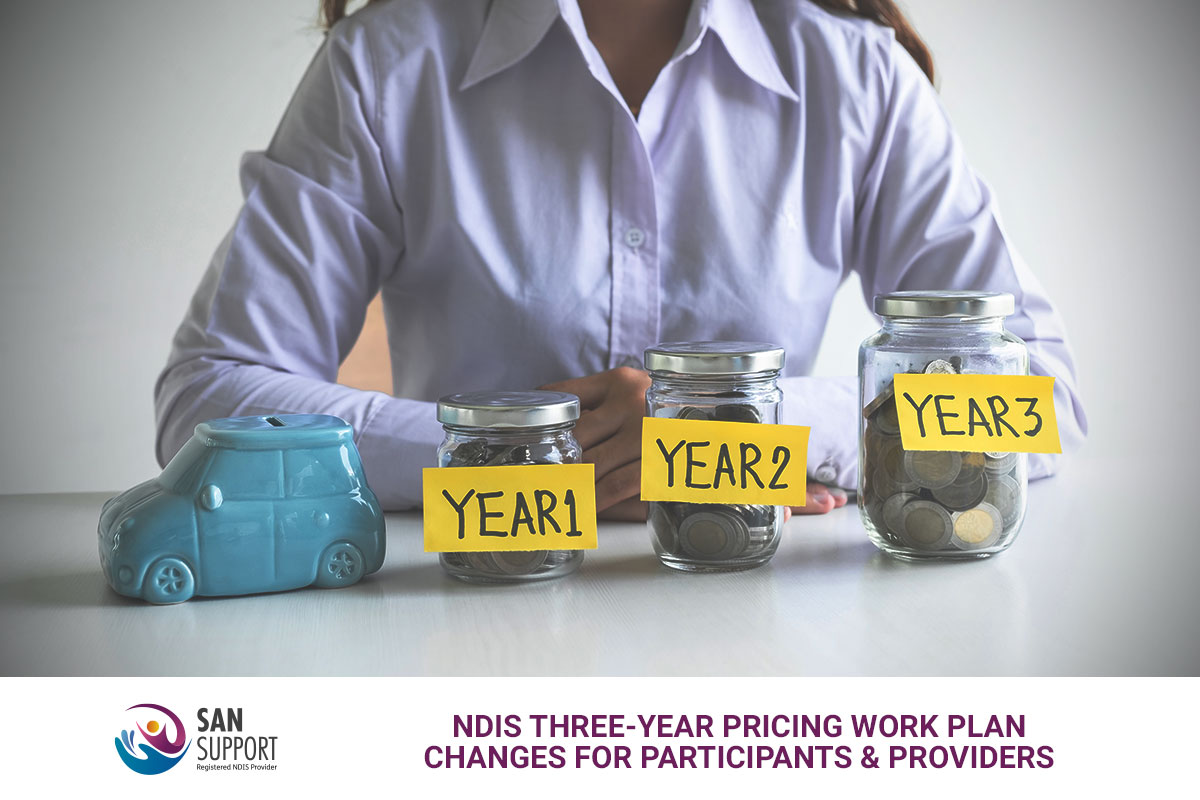
The NDIS has released a new Three-Year Pricing Work plan, outlining how pricing reforms will be developed, tested and implemented from 2025–26 to 2027–28. This long-term plan provides clearer direction on how pricing decisions will evolve, while focusing strongly on evidence, service quality and market sustainability.
For NDIS participants, disability support providers and support workers, pricing decisions directly influence access to services, workforce stability and overall support quality. Therefore, understanding the NDIS Three-Year Pricing Work plan helps individuals and organisations prepare for upcoming changes with greater confidence.
What Is the NDIS Three-Year Pricing Work plan?
The NDIS Three-Year Pricing Work plan acts as a structured roadmap for improving how disability support pricing works across Australia. Instead of introducing sudden or isolated price changes, the work plan follows a staged and evidence-based approach.
First, the NDIS gathers data through pilots, reviews and consultation. Next, it designs pricing reforms using that evidence. Finally, it implements and refines those reforms while monitoring their impact on participants and providers.
Because each year builds on the last, pricing decisions can better reflect real service delivery costs, workforce pressures and participant needs over time.
Why the NDIS Pricing Work plan Matters
NDIS pricing plays a critical role in shaping the disability support market. When pricing does not reflect actual costs or service complexity, providers struggle to remain sustainable and participants face reduced choice and access.
For this reason, the new pricing work plan aims to:
- Improve NDIS market sustainability
- Increase transparency and predictability in pricing
- Better recognise participant complexity and support intensity
- Reflect diverse service delivery models and workforce structures
- Align pricing with quality and safety expectations
By prioritising evidence-based pricing, the work plan supports a more balanced system that benefits both participants and providers.
Year One: Immediate Action and Evidence Building (2025–26)
In the first year, the NDIS focuses on building evidence while also taking immediate action where data already supports change.
During this stage, the Annual Pricing Review remains the main mechanism for adjusting prices. At the same time, quality support pilots collect real-world data on service delivery, workforce mix and participant outcomes. In addition, targeted reviews examine pricing in rural, regional and remote areas where markets often face greater challenges.
As a result, the NDIS can identify cost pressures and service gaps early, while laying strong foundations for future pricing reforms.
Year Two: Evidence-Informed Design and Targeted Implementation (2026–27)
After gathering sufficient evidence, the work plan moves into the design and testing phase in the second year.
At this point, the NDIS conducts formal pricing reviews for key supports such as therapy services and supported independent living. Meanwhile, findings from quality support pilots directly inform how new pricing models are designed.
Importantly, this stage explores more differentiated pricing approaches, allowing pricing to better reflect participant complexity, service intensity and workforce capability. Consequently, pricing becomes more aligned with how supports operate in real-world settings.
Year Three: Implementation and Refinement (2027–28)
In the final year, the NDIS focuses on implementing and refining pricing reforms across the Scheme.
During this phase, the NDIS embeds outcomes from major pricing reviews and consolidates evidence-based pricing approaches. At the same time, ongoing monitoring tracks how changes affect participants, providers and the broader market.
Additionally, scheduled reviews such as the Specialist Disability Accommodation pricing review ensure pricing remains aligned with design standards and market growth. Through continuous evaluation, the system stays responsive rather than static.
What This Means for NDIS Participants
For NDIS participants, the Three-Year Pricing Work plan aims to improve access to consistent, high-quality disability supports.
Over time, participants may experience:
- Improved availability of services
- Better alignment between pricing and individual support needs
- Greater transparency around service costs
- Stronger focus on quality and outcomes
Although changes will occur gradually, the long-term goal remains clear: a more reliable, participant-centred NDIS market.
What This Means for Providers and Support Workers
For providers and disability support workers, the work plan signals a shift toward pricing that better reflects real operating conditions.
Specifically, the work plan recognises:
- Workforce costs and award changes
- Service complexity and intensity
- Differences across provider models and locations
- The importance of long-term sustainability
Because reforms roll out progressively, providers gain greater visibility and time to plan for change.
Building a More Sustainable NDIS Pricing System
Ultimately, the NDIS Three-Year Pricing Work plan represents a move toward a more transparent, evidence-driven and sustainable pricing framework. By building evidence first, designing reforms carefully and implementing changes gradually, the approach balances participant choice with provider viability.
As a result, the disability support market becomes stronger, more responsive and better equipped to support participants to achieve their goals now and into the future.
*This information is general in nature and may change. Always refer to official NDIS sources for the most up-to-date details