
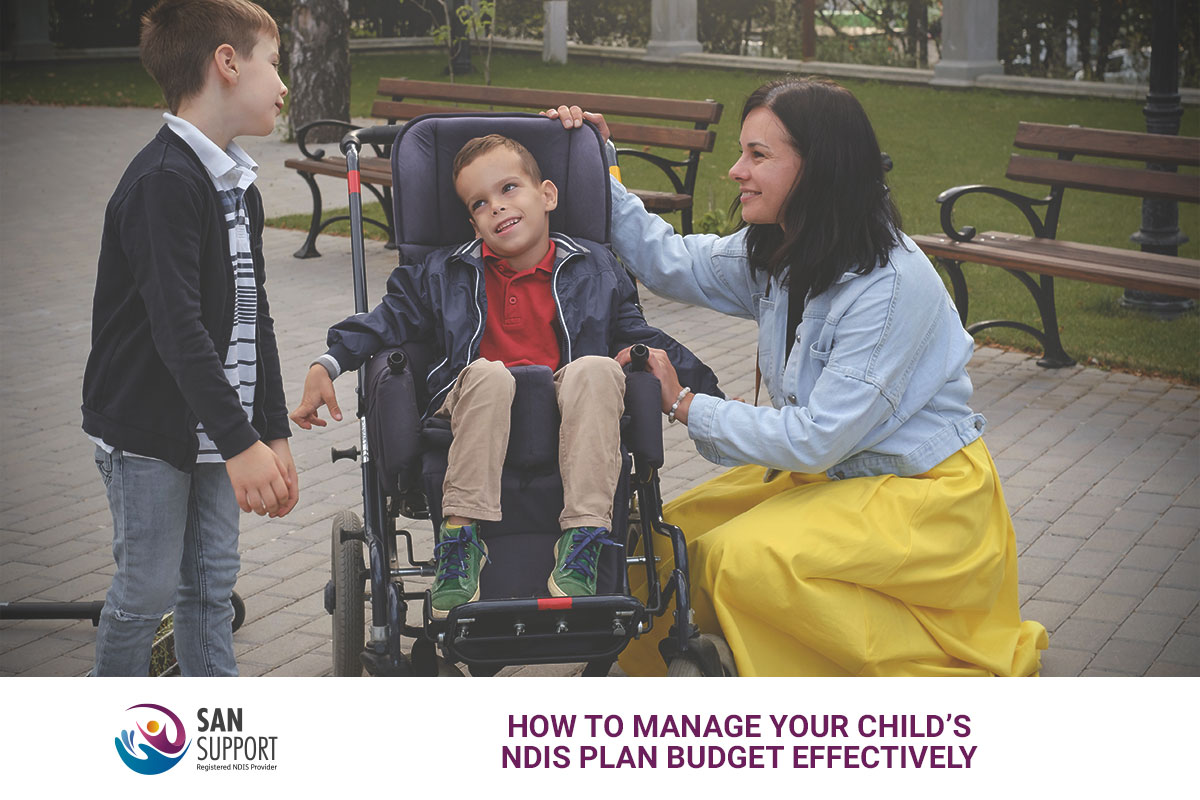
Managing your child’s NDIS plan budget can feel overwhelming especially when you are balancing therapy sessions, school routines and daily family life. Many Australian parents admit, “We used up all our NDIS funding too quickly!”
At SAN Support, we understand that effective NDIS budget management is the key to long-term success. When you plan carefully and make strategic decisions, your funding can last the entire year while still providing your child with consistent, meaningful support.
In this guide, we will share practical budgeting tips for parents that help you stretch your funding further, choose the right NDIS providers and maximise every dollar in your child’s plan.
Understand Your NDIS Plan
Before you create a budget, it is essential to understand how your child’s NDIS plan works. Each funding category serves a specific purpose and knowing what’s included helps you spend wisely and avoid confusion.
NDIS funding is divided into three main areas:
- Core Supports – Covers daily personal care, community participation and consumable items like continence products.
- Capacity Building Supports – Funds therapies such as occupational therapy, physiotherapy and speech therapy to help your child build independence.
- Capital Supports – Covers assistive technology, mobility aids and home modifications.
Once you understand these categories, you can allocate your funding correctly. If anything is unclear, speak with your Support Coordinator or Plan Manager to clarify. This first step ensures your plan stays on track and supports your child’s goals effectively.
Create a Clear and Realistic Budget Plan
After reviewing your plan, the next step is to create a structured NDIS budget plan. A well-organised budget helps you track spending, avoid running out of funds too early and plan for the entire year.
Start by dividing your total funding by 12 (for a monthly budget) or by 52 (for a weekly guide). Then, list your regular services therapy sessions, community activities and support worker hours.
For example, if your child’s speech therapy costs $180 per session and you have $7,200 allocated under Capacity Building, you can schedule 40 sessions across the year. By spreading appointments evenly, you will maintain consistency without overspending.
Use a simple spreadsheet or a budgeting app to record each session and monitor how much of your funding remains. Regular tracking keeps you in control and prevents unexpected shortfalls.
Choose Cost-Effective and Flexible NDIS Providers
Your choice of provider can significantly impact how far your NDIS funding goes. Choosing the right NDIS service provider means balancing cost, quality and flexibility.
When comparing providers, consider the following questions:
- Do they offer shorter sessions (e.g., 45 minutes) to reduce costs?
- Are there travel or cancellation fees?
- Can they provide joint sessions (for example, OT and physiotherapy together)?
- Do their services align with your child’s NDIS goals?
Also, attending therapy sessions at the provider’s clinic can often reduce travel fees. Choosing transparent and flexible providers ensures your funding is used efficiently and delivers maximum value to your child’s progress.
Plan Around Your Child’s School Year
Your child’s energy levels and routine change throughout the school year, so it is smart to align therapy sessions accordingly. Planning ahead keeps therapy effective and manageable.
Here’s how to structure your schedule:
- Term 1: Start gently. Focus on settling into school before increasing therapy sessions.
- Terms 2–3: Increase sessions when your child feels more confident and focused.
- Term 4: Reduce the load to avoid burnout as the school year winds down.
Additionally, review the school calendar for holidays, excursions and special events. Cancelling sessions in advance helps you avoid unnecessary costs while maintaining a balanced therapy routine.
Get the Most Value from Your NDIS Funding
Stretching your NDIS budget is not about spending less it is about spending smarter. Small adjustments can help you get more value out of your plan without compromising quality.
Here are some proven strategies:
- Join group therapy sessions: They are more affordable and help your child develop social skills.
- Ask for school-based therapy: Some therapists visit schools, which reduces travel time and fees.
- Buy affordable therapy tools: Retailers sell great sensory and educational items at low prices.
- Borrow instead of buying: Check local toy libraries or the Special Education Resource Unit (SERU) for free or low-cost equipment loans.
- Try online therapy (telehealth): This can reduce travel costs and increase flexibility.
By being resourceful, you can make your funding last longer while still providing high-quality support for your child.
Track Your Spending Consistently
Consistent monitoring is one of the best ways to manage your NDIS budget effectively. When you review your spending regularly, you can make timely adjustments and avoid overspending.
Check your funding every month to see:
- How much you have used so far
- Which services are most expensive
- How many therapy hours remain
- Whether your child’s therapy is meeting their NDIS goals
If you are plan-managed, ask your Plan Manager for monthly summaries. If you are self-managed, log into the NDIS portal to check your balances. Tracking your spending consistently gives you clarity, confidence and control over your funds.
Build a Strong Support Network
Managing an NDIS plan can feel easier when you connect with others who understand the process. Building a strong network helps you learn from shared experiences and discover new cost-saving ideas.
Consider joining:
- Local NDIS parent or carer groups
- Online NDIS support forums and Facebook communities
- Workshops run by your Local Area Coordinator (LAC)
By sharing experiences and advice, you will gain valuable insights into effective NDIS budgeting and service management.
Conclusion
Managing your child’s NDIS plan budget does not have to be stressful. When you understand your plan, create a clear budget, choose the right providers and track your spending consistently, you take control of your funding and your child’s progress.
At SAN Support, we are passionate about helping Australian families make the most of their NDIS plans. Through proactive budgeting, transparent support and practical planning, you can ensure your child’s funding lasts and continues to make a real difference in their development.
Plan smart, act early and make every NDIS dollar count for your child’s brighter and more independent future.