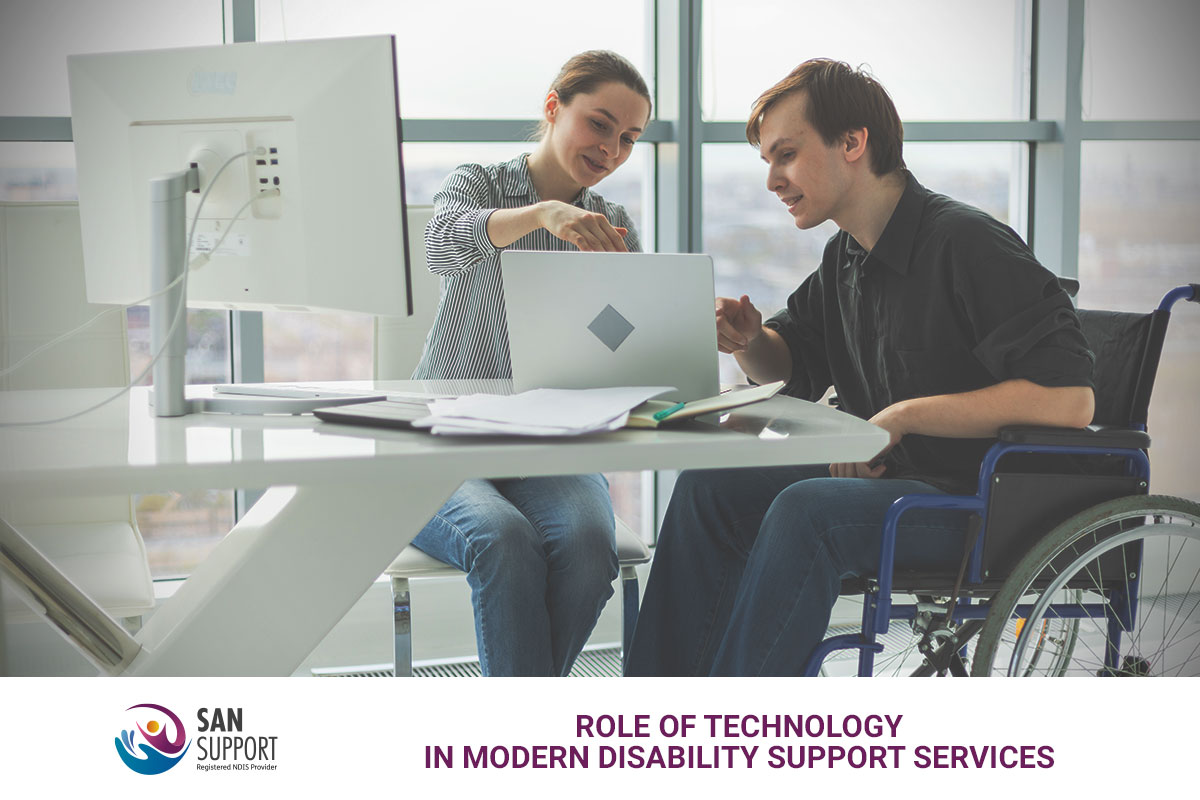
Technology in disability support services is transforming how providers deliver care across Australia. As the National Disability Insurance Scheme (NDIS) continues to grow, participants and families expect more personalised, transparent and efficient support. Consequently, providers now rely on digital systems and assistive tools to improve coordination, safety and communication.
Importantly, technology does not replace compassionate care. Instead, it strengthens service delivery by reducing administrative pressure and enhancing responsiveness. When organisations adopt innovation responsibly, they create more participant-centred disability support services that align with modern expectations.
Enhancing Daily Operations Through Digital Systems
To begin with, modern disability support services involve far more than hands-on assistance. Providers must coordinate staff schedules, maintain accurate documentation, meet compliance requirements and communicate effectively with families. Without structured systems, these responsibilities can quickly become complex and time-consuming.
Therefore, many organisations now implement digital platforms to:
- Manage staff scheduling and shift coordination
- Maintain secure electronic care plans and case notes
- Record incidents and safeguard documentation
- Monitor service quality and compliance standards
- Communicate updates efficiently with families
As a result, technology in disability support services improves accountability and operational efficiency. Support workers can then focus more on building meaningful connections rather than completing paperwork.
Improving Staff and Participant Matching
Strong relationships between participants and support workers remain essential for positive outcomes. While professional qualifications matter, compatibility also plays a significant role in long-term success.
For this reason, providers increasingly use digital systems to enhance staff-participant matching. These systems allow organisations to:
- Record participant preferences, routines and goals
- Track support worker skills, experience and interests
- Analyse compatibility indicators
- Review feedback to improve long-term matches
By using data to inform decisions, providers reduce mismatches and service disruptions. Consequently, participants experience greater stability, improved communication and stronger trust in their support network.
Strengthening Communication with Families
In addition, families often seek reassurance about their loved one’s care. Clear and consistent communication builds confidence and strengthens collaboration. Technology enables providers to share updates securely without disrupting daily routines.
Secure platforms may offer:
- Real-time shift confirmations
- Notifications of schedule changes
- Progress updates aligned with participant goals
- Access to relevant documentation
Through these tools, providers promote transparency while maintaining privacy and consent standards. As a result, families remain informed and engaged in the support journey.
Supporting Independence Through Assistive Technology
Assistive technology represents one of the most impactful aspects of technology in disability support services. These tools empower participants to manage daily activities more independently and confidently.
Common assistive technologies include:
- Augmentative and Alternative Communication (AAC) devices
- Smart home systems for lighting and appliances
- GPS tracking and wearable safety devices
- Mobile applications for reminders and daily planning
- Digital medication management systems
When support workers receive proper training, they can integrate these tools seamlessly into daily routines. Rather than limiting autonomy, assistive technology enhances independence and encourages skill development.
Strengthening Compliance and Quality Standards
At the same time, providers must meet strict regulatory requirements under the NDIS Quality and Safeguards framework. Managing compliance manually increases the risk of errors and inefficiencies. Therefore, digital management systems now play a vital role in maintaining high standards.
Technology supports providers by:
- Tracking staff certifications and mandatory training
- Recording service delivery accurately
- Documenting incidents and safeguarding actions
- Conducting internal audits
- Analysing data to identify service improvements
By automating these processes, organisations respond more quickly to participant needs while maintaining professional accountability.
Balancing Innovation with Human-Centred Care
Although technology enhances efficiency, compassionate and person-centred care remains fundamental. Support workers provide empathy, encouragement and human connection that digital systems cannot replicate.
For this reason, providers must balance innovation with personal interaction. When technology reduces administrative workload, support workers gain more time to focus on communication and relationship-building. Consequently, participants benefit from both structured systems and genuine care.
Conclusion
Technology in disability support services continues to reshape care delivery across Australia. From smarter staff matching and improved communication to assistive devices and compliance systems, innovation enhances efficiency, safety and participant experience.
When providers combine modern technology with compassionate, person-centred practice, they create stronger and more responsive support environments. At SAN Support, we integrate practical solutions with skilled support professionals to deliver high-quality disability support services.
By combining innovation with care, we help promote independence, communication and positive outcomes for participants across Australia.