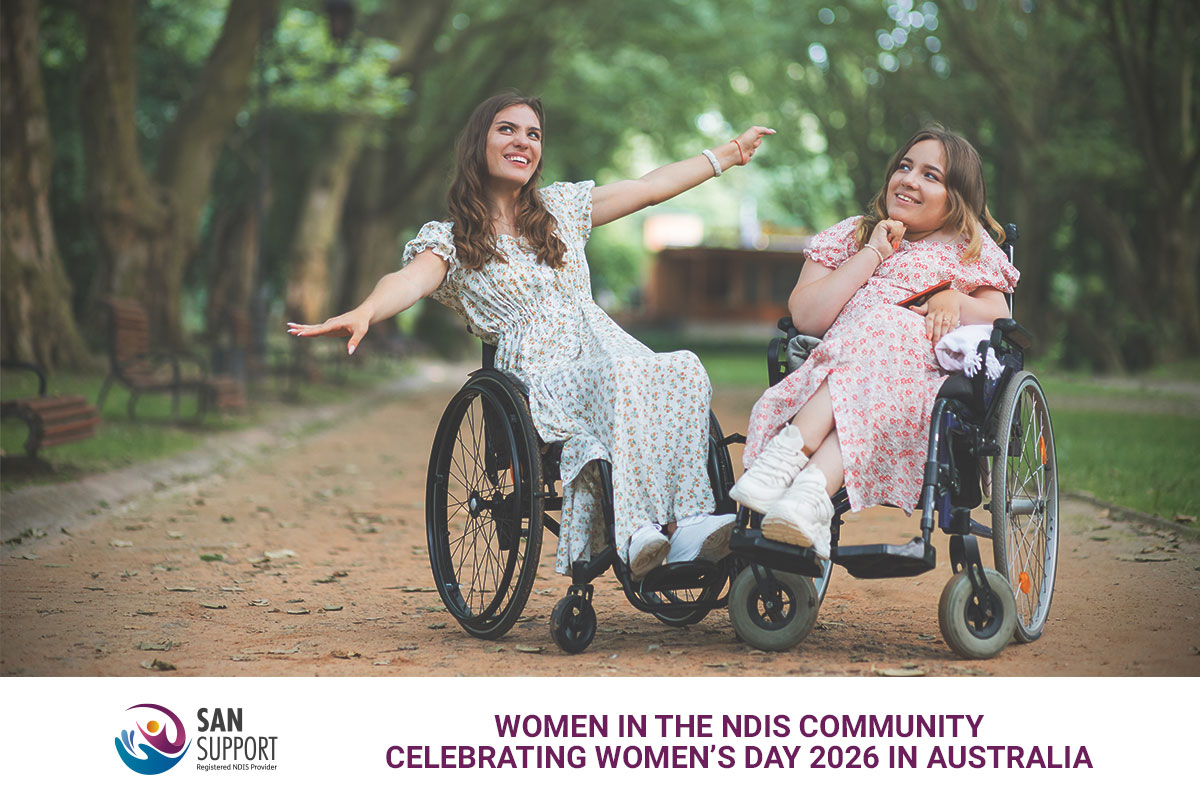
Every year, International Women’s Day encourages us to recognise the achievements and leadership of women across Australia. Importantly, it also gives us the opportunity to celebrate women in the NDIS community who contribute to the disability support sector in meaningful ways.
Across Australia, women with disability actively pursue education, employment, independent living and community participation. At the same time, many women work within disability support services, allied health and support coordination roles. Therefore, Women’s Day offers an important moment to reflect on their impact and reaffirm the value of inclusion within the National Disability Insurance Scheme (NDIS).
The Growing Impact of Women in the NDIS Community
Women continue to shape the disability support sector through participation, leadership and professional contribution. On one hand, women with disability in Australia set personal goals and use structured NDIS supports to build independence. On the other hand, women professionals deliver essential services that strengthen the quality of care across the country.
For example, women contribute by:
- Participating in Supported Independent Living (SIL) programs
- Engaging in community participation activities
- Working as disability support workers and support coordinators
- Providing allied health services such as speech therapy and physiotherapy
- Advocating for accessibility and inclusive communities
As a result, women play a central role in strengthening Australia’s disability services framework.
How Disability Support Services Promote Inclusion
High-quality disability support services help participants build skills, maintain routines and work towards long-term goals. Under the NDIS framework, providers align supports with individual plans, ensuring services reflect each participant’s needs and preferences.
Specifically, disability support services in Australia may include:
- Assistance with daily living and personal care
- In-home supports that maintain structure and stability
- Community participation programs that encourage social engagement
- Support coordination to navigate NDIS plans effectively
- Access to allied health services across Australia
When providers deliver these services professionally and respectfully, they promote confidence, routine and skill development. Consequently, women in the NDIS community can pursue personal growth within structured and supportive environments.
Community Participation Strengthens Social Connection
In addition to in-home supports, community participation plays a vital role in overall wellbeing. When women actively engage in community activities, they build confidence, develop communication skills and strengthen social networks.
Community participation supports may involve:
- Attending local events and social programs
- Joining recreational and cultural activities
- Participating in skill-building workshops
- Accessing allied health programs
- Exploring volunteering or employment pathways
As a result, inclusive community participation strengthens both individual wellbeing and broader social inclusion across Australia.
Women in the Disability Support Sector
Not only do women participate in NDIS supports, but they also lead and deliver services within the disability support sector. Across Australia, many women work as:
- Disability support workers
- Support coordinators
- Occupational therapists
- Physiotherapists
- Speech pathologists
- Behavioural support practitioners
Through their expertise and professionalism, they enhance service quality and uphold standards within the NDIS framework. Consequently, their contribution strengthens trust and reliability within disability support services.
Why Recognising Women in the NDIS Community Matters
Recognising women in the NDIS community on International Women’s Day reinforces the importance of inclusion, professionalism and equal participation. Furthermore, it highlights the diverse roles women hold as participants, professionals and advocates within Australia’s disability services landscape.
By continuing to prioritise accessible disability support services, Supported Independent Living programs and structured community participation, the sector supports meaningful involvement across all areas of life.
Conclusion
International Women’s Day provides a valuable opportunity to celebrate the leadership, participation and professional contribution of women in the NDIS community. Across Australia, women with disability and women working in disability services continue to strengthen inclusion and promote structured, goal-oriented support systems.
As the disability support sector evolves under the NDIS framework, recognising and supporting women’s involvement remains essential. Through inclusive practices, professional service delivery and active community engagement, Australia can continue building accessible and supportive environments for everyone.