
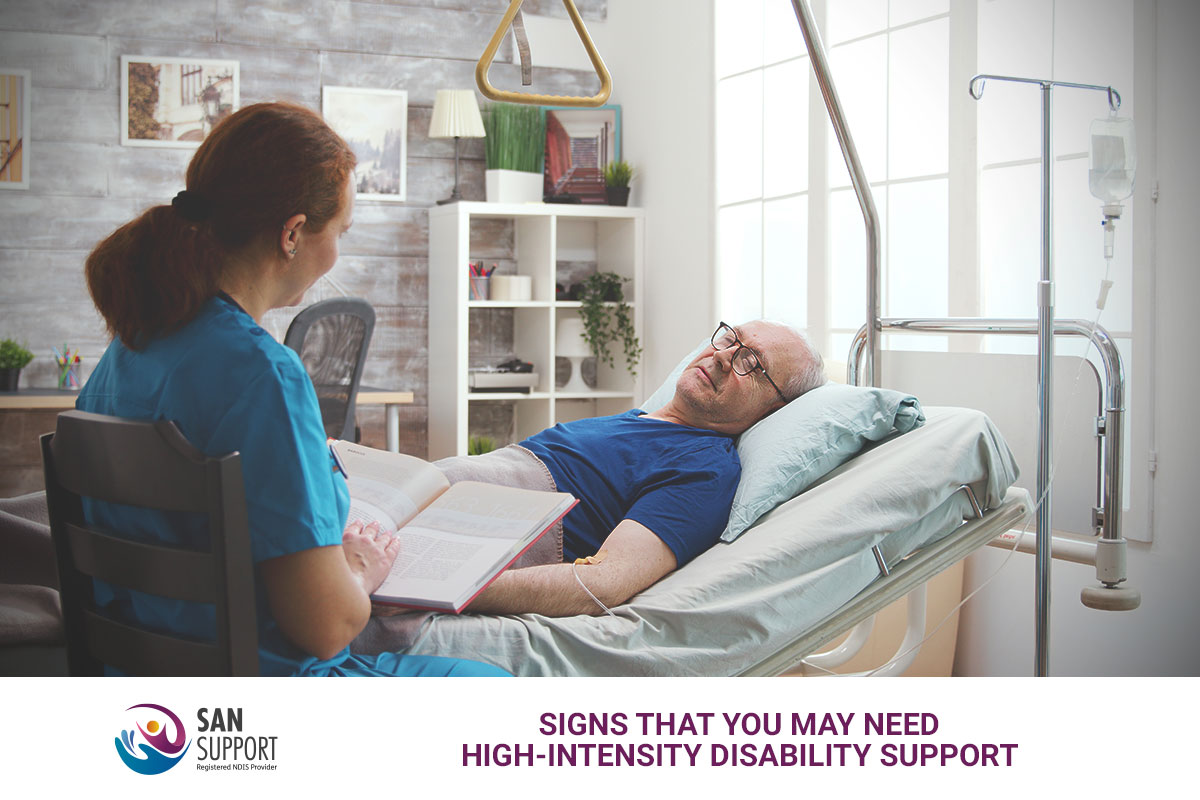
As disability support needs change, it becomes essential to review whether current services still meet daily living and safety requirements. In many cases, standard disability supports no longer provide enough structure or consistency. When this happens, high-intensity disability support can make a meaningful difference.
High-intensity disability support services assist NDIS participants with complex physical, behavioural, cognitive or mental health needs. In this article, we explain the key signs that indicate when high-intensity support may be needed and how this level of care improves quality of life.
What Is High-Intensity Disability Support?
It provides specialised assistance for participants who require frequent, skilled or continuous care. Unlike standard supports, these services actively address complex needs and reduce daily risks.
For example, high-intensity support may include complex personal care, behaviour support, health monitoring and 24/7 supervision. In addition, support workers often collaborate with allied health professionals such as psychologists, occupational therapists, physiotherapists and speech therapists. As a result, participants receive coordinated and consistent care aligned with their goals.
Signs You May Need High-Intensity Disability Support
Daily Living Tasks Are Increasingly Difficult
When daily activities such as showering, dressing, eating or moving around the home become consistently challenging, this often signals a need for higher-level support. Over time, these difficulties can affect physical health, emotional wellbeing and confidence.
However, high-intensity disability support actively assists with daily routines while maintaining dignity and comfort. As a result, participants experience reduced stress and improved stability in their everyday lives.
Physical or Behavioural Support Needs Require Ongoing Management
Many NDIS participants live with physical limitations or behavioural challenges that require skilled and consistent care. For instance, mobility issues, sensory regulation difficulties or behaviours of concern can significantly impact daily life.
In these situations, high-intensity support services provide trained support workers who follow structured care and behaviour support plans. Consequently, participants benefit from predictable routines, reduced distress and safer environments.
Safety Depends on Continuous Supervision
In some cases, a participant’s health or safety depends on constant monitoring. Conditions such as severe intellectual disability, complex mental health needs, epilepsy or neurological disorders often require immediate access to support.
Therefore, high-intensity disability support offers 24/7 supervision through Supported Independent Living or intensive in-home care. This approach ensures timely responses during emergencies and promotes long-term safety and wellbeing.
Community Participation Has Become Limited
Community engagement plays an important role in emotional and social wellbeing. However, many participants with complex needs struggle to access community activities due to physical, behavioural or emotional barriers.
High-intensity disability support actively removes these barriers by assisting with transport, planning and skill development. As a result, participants can engage in social activities, build relationships and strengthen their connection to the community.
Multiple Services Need Strong Coordination
When a participant receives support from several professionals, coordination becomes essential. For example, care may involve disability support workers, psychologists, allied health therapists, healthcare providers and support coordinators.
In these situations, high-intensity disability support brings all services together under one structured plan. Consequently, support remains consistent, goal-focused and responsive to changing needs.
How High-Intensity Disability Support Improves Quality of Life
High-intensity disability support actively enhances safety, independence and emotional wellbeing. With consistent care in place, participants often experience reduced stress, improved confidence and better daily outcomes.
At the same time, families and carers gain reassurance knowing their loved one receives skilled, reliable support. Over time, this structured approach enables participants to achieve greater independence within a supported environment.
Disability Support at SAN Support
At SAN Support, we deliver NDIS disability support services across Brisbane. Our services include complex personal care, behaviour support, community participation, Specialist Disability Accommodation and coordinated disability support.
Most importantly, we take a person-centred approach that respects individual choices while promoting safety, empowerment and long-term stability.
Conclusion
Recognising the need for high-intensity disability support is a proactive step toward improved wellbeing. When daily tasks, safety or community participation become difficult to manage, specialised NDIS support provides the structure and care needed to move forward.
With the right support in place, individuals with complex needs can live safer, more connected and more fulfilling lives.
You Can Also Read: