
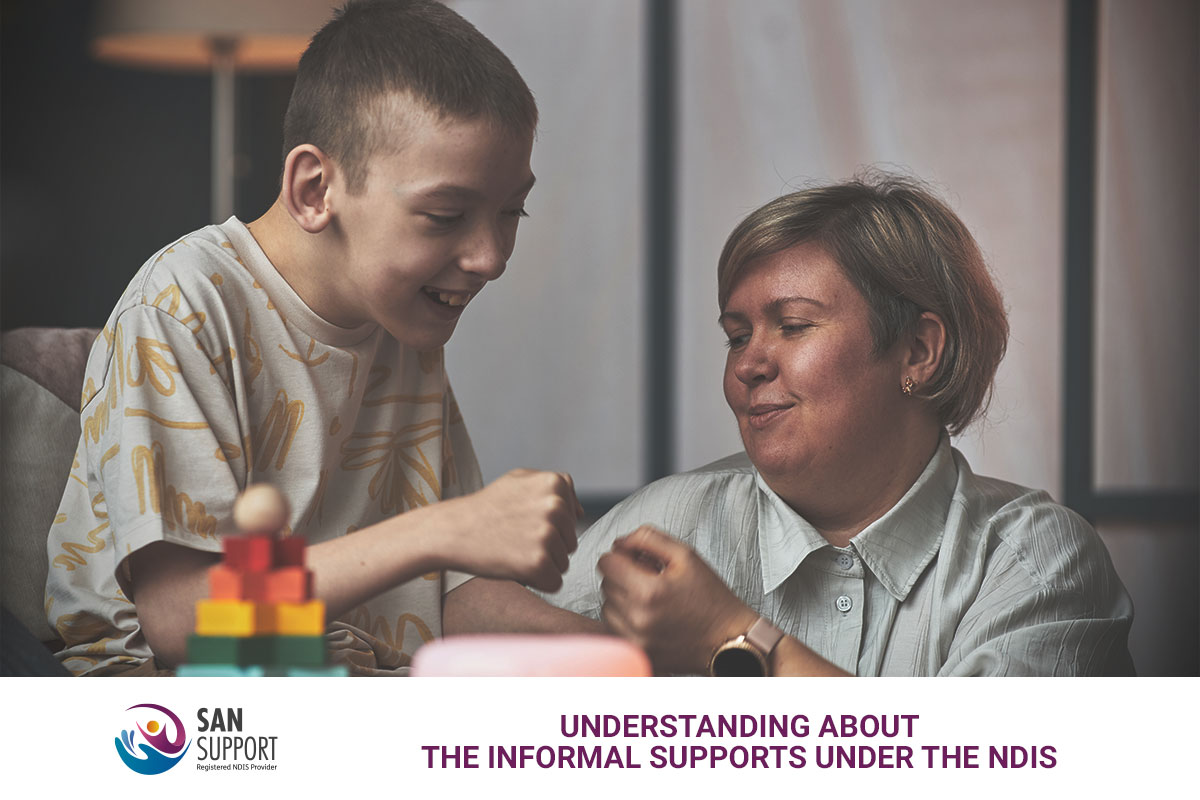
Informal supports under the NDIS play a key role in supporting people with disability in their everyday lives. When the National Disability Insurance Scheme (NDIS) develops a plan, it considers more than just funded services. It also looks at the unpaid support participants already receive from family, friends and the wider community.
By understanding informal supports, participants and carers can build more balanced and sustainable support arrangements.
What Are Informal Supports Under the NDIS?
Informal supports under the NDIS refer to unpaid help provided by people you know. This may include parents, siblings, extended family members, friends, neighbours or community members.
Because there is no payment and no service agreement, the NDIS classifies this help as informal. Typically, people provide this support naturally, based on care, trust and long-standing relationships.
Importantly, the NDIS values informal supports because they promote independence, emotional wellbeing and social inclusion. However, the NDIS does not expect informal supports to replace funded services. Instead, informal supports form part of the overall support picture.
How Informal Supports Fit Into Your NDIS Plan
When the National Disability Insurance Agency (NDIA) creates or reviews an NDIS plan, it considers the informal supports you currently receive. Planners look at the type of support provided, how often it occurs and whether it can continue safely over time.
While the NDIS usually expects family and friends to provide reasonable daily assistance, informal supports can become demanding. As a result, a well-balanced NDIS plan combines informal supports with funded disability services to protect relationships and prevent carer burnout.
Common Examples of Informal Supports
Informal supports may include:
- Family members assisting with personal care, meals or household tasks
- Friends helping with transport or attending appointments
- Neighbours supporting errands or basic home maintenance
- Emotional support and companionship
- Community members supporting social participation or skill development
These supports often provide flexibility and emotional connection that formal services may not always offer.
Informal Supports vs. Formal Supports under the NDIS
Understanding the difference between informal and formal supports helps participants prepare for NDIS planning and review meetings.
| Aspect | Informal Supports | Formal Supports |
| Who provides the support | Family, friends, neighbours and community members | NDIS providers and support workers |
| Payment | Unpaid and voluntary | Paid through NDIS funding |
| Service agreement | No agreement or contract | Formal service agreement |
| Nature of support | Relationship-based and flexible | Structured and planned |
| Examples | Emotional support, transport, errands, companionship | Disability support workers, allied health, support coordination |
| Role in NDIS plan | Considered part of everyday life | Funded to meet disability-related needs |
The NDIS considers how both types of supports work together when deciding what supports are reasonable and necessary.
Recording Informal Supports
Accurately recording informal supports helps ensure your NDIS plan reflects your real-life needs. When listing informal supports, include who provides the support, their relationship to you, the type of assistance they offer and how often the support occurs.
Recording informal supports is especially important if respite care or additional funded supports may be needed, as the NDIS must recognise informal carers before funding these services.
Informal Supports for Children and Adults
For children under 18, the NDIS generally expects parents and close family members to provide everyday care such as transport, supervision and personal care. These supports are usually not funded unless a child’s needs are significantly greater due to disability.
For adults, informal supports may include social outings, emotional support or help with errands. Over time, the NDIA considers whether these supports remain reasonable, safe and sustainable, particularly as circumstances change.
When Informal Supports May No Longer Be Enough
Informal supports may no longer meet a participant’s needs if support requirements increase, carers experience burnout, safety risks arise or relationships become strained. In these situations, participants should speak with a Support Coordinator, Local Area Coordinator or request an NDIS plan review.
How SAN Support Can Help
SAN Support supports NDIS participants by creating balanced support systems that value informal supports while ensuring appropriate funded services are in place. Through support coordination, in-home supports and community participation, we help participants maintain independence and wellbeing.
Conclusion
Informal supports under the NDIS remain essential to everyday life. When recognised and balanced with funded disability supports, they strengthen NDIS plans, protect relationships and improve long-term outcomes.