
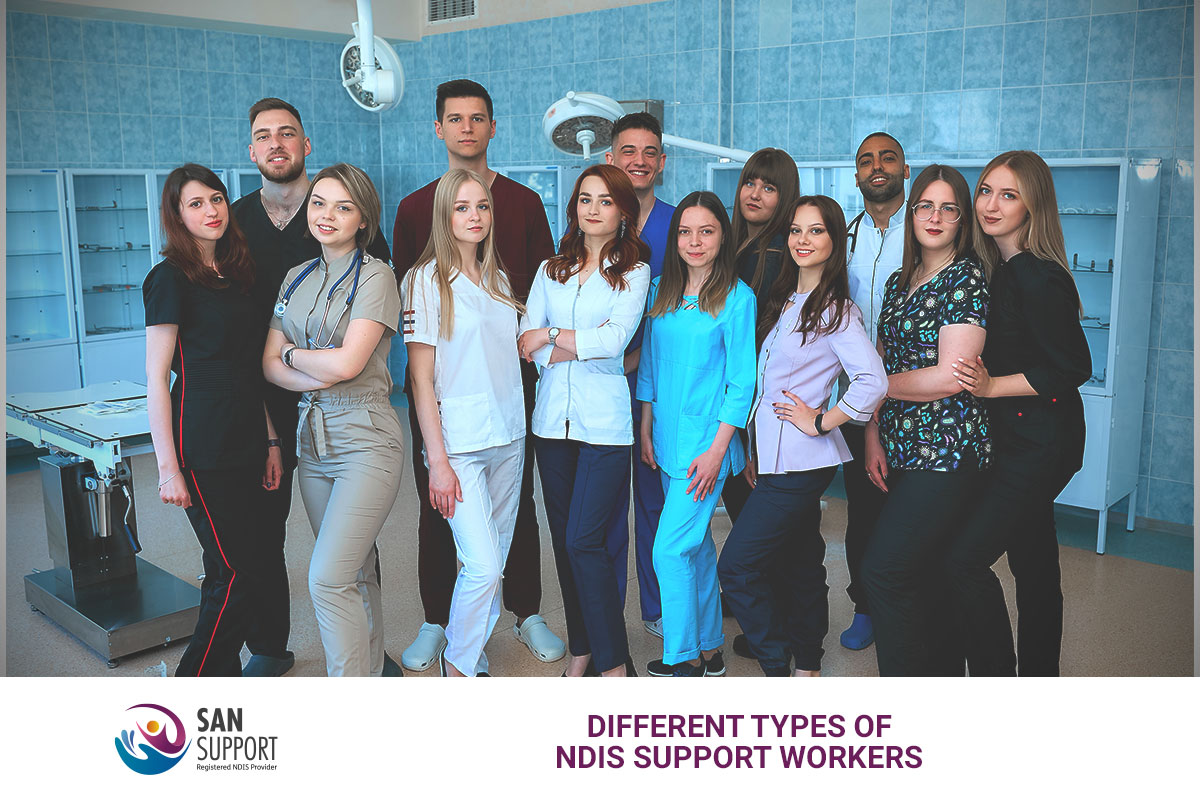
Support workers play an important role in helping people with disability live independently and take part in everyday life. Through the National Disability Insurance Scheme (NDIS), participants can access a range of disability support services delivered by skilled and compassionate professionals. By understanding the different types of NDIS support workers, participants and families can make informed choices about their supports and build a team that aligns with their goals, needs and lifestyle.
Personal Care Support Workers
Personal care support workers help participants with daily personal tasks that require hands-on assistance. They provide support respectfully and always protect dignity and privacy.
For example, personal care support workers assist with showering, grooming, dressing, personal hygiene, eating and drinking and toileting. This type of NDIS support worker helps participants stay comfortable, healthy and supported in their daily routines.
In-Home and Daily Living Support Workers
In-home and daily living support workers help participants manage everyday tasks at home so they can live safely and independently. Instead of taking over, these workers encourage participation and skill-building.
They often assist with meal preparation, cleaning, laundry, home organisation, grocery shopping and essential errands. As part of NDIS support workers, this role focuses on building confidence and independence at home.
Community Participation Support Workers
Community participation support workers help participants stay socially active and connected to their local communities. This type of support plays a key role in building confidence and reducing isolation.
Support workers may assist participants to attend community events, join social groups, enjoy hobbies or access local services. Through this support, participants feel more included and connected, which is an important outcome of NDIS disability support services.
Transport Support Under the NDIS
Transport support under the NDIS is usually provided by disability support workers who assist participants with travel, rather than through a separate transport-specific role.
Depending on a participant’s NDIS plan, transport support may be funded under community access, capacity building or provider travel costs. In some cases, participants may also receive an NDIS transport allowance.
Support workers may help participants attend appointments, use public transport with confidence, plan safe routes, manage time or travel as part of community participation. This form of assistance supports independence and access to essential services.
Supported Independent Living (SIL) Support Workers
Supported Independent Living (SIL) support workers assist participants who live in shared or supported accommodation. These workers provide daily support while encouraging independence and life skill development.
They may help with daily routines, independent living skills, shared-living relationships and overnight or 24-hour support when required. SIL workers are one of the key types of NDIS support workers for participants who need structured living arrangements.
Behaviour Support Workers
Behaviour support workers assist participants who experience behaviours of concern by using positive, person-centred approaches. They work alongside Behaviour Support Practitioners to ensure consistent and supportive care.
These workers help participants manage emotions, improve communication and follow behaviour support plans in everyday settings. Their role focuses on understanding behaviour and improving quality of life.
Support Coordination as a Capacity-Building Role
Support coordinators help participants understand, manage and use their NDIS plans effectively. While they do not provide hands-on care, they play an important capacity-building role within the NDIS.
Support coordinators explain NDIS plans and budgets, connect participants with suitable providers, coordinate services and help resolve challenges. This role supports participants to make informed choices about the different types of NDIS support workers they engage.
Why Choosing the Right NDIS Support Worker Matters
Choosing the right support worker can make a real difference in a participant’s life. The right match supports independence, wellbeing and progress toward personal and NDIS goals.
Because every participant’s needs are different, understanding the different types of NDIS support workers allows supports to remain flexible and responsive as needs change.
How SAN Support Helps
At SAN Support, we provide reliable and person-centred NDIS disability support services. Our team delivers personal care, in-home supports, community participation, support coordination and other such services. We focus on helping participants live with dignity, confidence and independence.
Conclusion
The NDIS offers access to many types of support workers, each supporting participants in different ways. By understanding the different types of NDIS support workers, participants and families can make informed decisions and build a support team that supports long-term independence and wellbeing.